Our editors evaluated 3 Gpu options against the criteria readers actually weigh up: price, real-world performance, build quality, warranty, and UK availability. Picks lean toward what we'd recommend to a friend buying today, not specs-on-paper winners.
Hands-on contextEditor notes from individual reviews, not press releases.
Live UK pricingRefreshed from Amazon UK twice daily.
No paid placementsAffiliate commission doesn't change what wins.
Finding the best graphics cards for 1440p gaming under £300 is genuinely harder than it sounds. The GPU market in 2026 is a strange place. You have brand-new Nvidia Blackwell cards sitting alongside a seven-year-old AMD workhorse, all competing for the same wallet. Some of these cards are proper 1440p performers. Others are compromises dressed up in marketing language. This guide cuts through that. We have looked at four cards across the price range, from a budget RX 580 all the way up to the new RX 9060 XT, and ranked them honestly based on what they actually deliver at 1440p. No fluff. Just the facts you need to spend your money well.
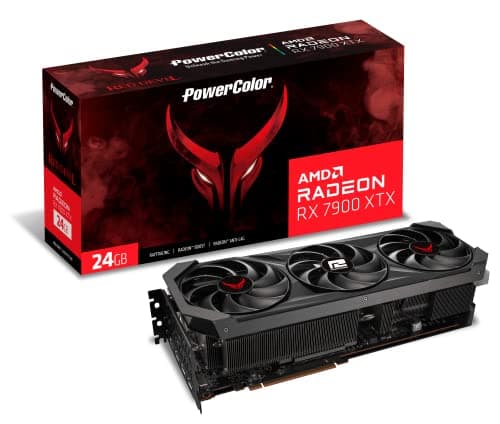
Here's the thing: when you are shopping for the best graphics cards for 1440p gaming under £300, the RX 9060 XT is the card that makes the decision easy. AMD's RDNA 4 architecture brings a meaningful generational leap over its predecessors, and Gigabyte's GAMING OC variant squeezes a 3320 MHz boost clock out of it from the factory. That is not a trivial overclock. In practice, it translates to frame rates that sit comfortably in the 60 to 100 fps range at 1440p high settings across most modern titles, and that is without touching FSR 4.
The headline spec, though, is the 16GB of GDDR6. At 1440p in 2026, 8GB is starting to feel tight in texture-heavy games. The RX 9060 XT sidesteps that problem entirely. You are not going to hit a VRAM wall in any current title at this resolution, and that gives this card a longer useful lifespan than anything else in this roundup. It is a proper future-proofing argument, not a marketing one.
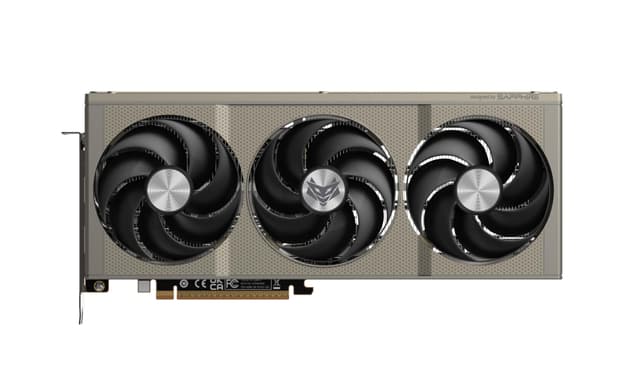
The triple-fan WINDFORCE cooling system keeps temperatures sensible under load. Gigabyte quotes a 0dB mode for light workloads, which means the fans stop spinning entirely when you are browsing or watching video. Noise levels during gaming are low. The card runs cool enough that you will not be fighting thermals even in a mid-tower with average airflow.
Connectivity covers two DisplayPort outputs and one HDMI, which is fine for most setups. PCIe 5.0 support is there if your motherboard has it, but it runs without issue on PCIe 4.0 boards too. The 128-bit memory bus is the one genuine limitation here. It is narrower than you might expect at this price, and bandwidth-hungry scenarios do show a ceiling. But for 1440p gaming specifically, it is not a dealbreaker. AMD's memory compression tech does a decent job of compensating.
At the top of this budget bracket, the RX 9060 XT GAMING OC 16G is the card to beat. Nothing else here comes close for 1440p gaming performance per pound.
Pros
16GB GDDR6 VRAM is exceptional at this price point
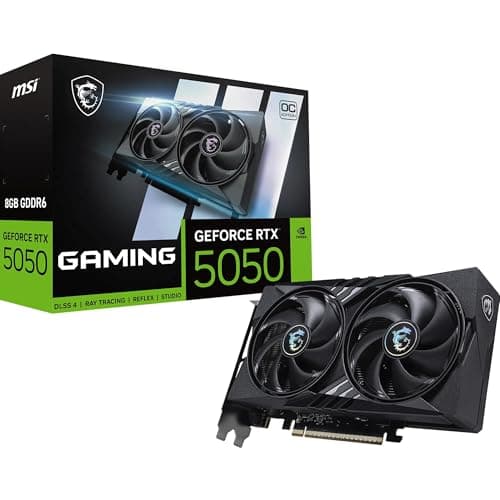
The MSI RTX 5050 GAMING OC is the card that makes Nvidia's Blackwell generation accessible without breaking the bank. At under £220, it is the most affordable new-generation GPU in this roundup, and it brings a surprising amount to the table for anyone stepping into 1440p gaming for the first time.
The Twin Frozr 10 cooling solution is genuinely good. Two STORMFORCE fans, a well-engineered heatsink, and MSI's thermal compound application keep this card running cool and quiet even during extended gaming sessions. For a beginner who might not have a perfectly optimised case with great airflow, that thermal headroom is reassuring. You are not going to cook this card through normal use.
DLSS 4 support is the other big selling point. Nvidia's latest upscaling technology, including Multi Frame Generation, is available on the RTX 5050. In supported titles at 1440p, DLSS 4 can effectively double or triple your frame rate output with minimal visual quality loss. For a beginner who wants to play modern games at 1440p without spending £300, that is a genuinely useful tool. It is not cheating. It is just smart use of the hardware you have.
The 8GB GDDR6 at 20Gbps is decent for the price. It is not GDDR7, but the 20Gbps speed keeps it competitive. At 1440p medium to high settings, most games run well. You will hit the ceiling in some very demanding titles, but the majority of your library will be fine. PCIe 5.0 support means this card is ready for current and next-generation platforms.
So why is it third rather than second? Purely because the ASUS RTX 5060 LP offers GDDR7 and better raw performance for a modest price premium. But if £220 is your ceiling, the RTX 5050 GAMING OC is a proper recommendation for 1440p gaming on a budget.
Pros
Most affordable new-generation Nvidia card in this roundup
Twin Frozr 10 cooling is excellent for the price
DLSS 4 with Multi Frame Generation support
PCIe 5.0 ready
Clean, straightforward setup for beginners
Cons
8GB GDDR6 rather than GDDR7 limits peak bandwidth
Noticeably behind the RX 9060 XT in raw 1440p rasterisation
DLSS 4 dependency means weaker performance in non-supported titles
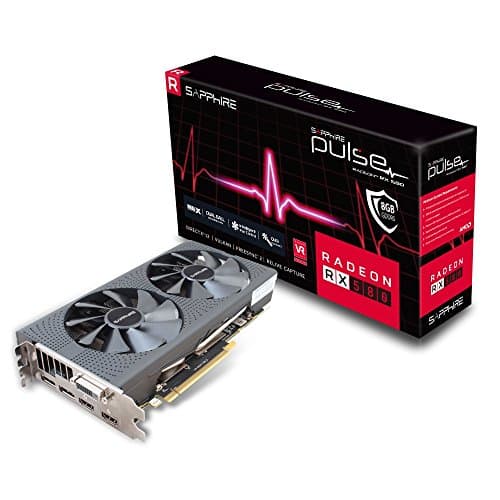
Right. Let's be honest about the RX 580. It is a seven-year-old card based on AMD's Polaris architecture. It was a great card in 2017. In 2026, asking it to handle 1440p gaming in modern titles is a stretch. But it is in this roundup for a reason, and that reason is the used market price.
New, the RX 580 lists at around £149 on Amazon, which is genuinely hard to justify when the RTX 5050 exists at £220. But on the second-hand market, working RX 580 cards regularly appear for £40 to £60. At that price, for someone who needs a GPU right now and cannot stretch further, it is a legitimate option. Sapphire's Pulse cooler is well-regarded and these cards have proven remarkably durable over the years. The 8GB of GDDR5 is slower than anything else here, but it is still 8GB.
For 1440p gaming specifically, the RX 580 is a compromise. In older titles, esports games, and anything that is not graphically demanding, it handles 1440p at medium settings reasonably well. You will see 40 to 60 fps in games like CS2, older Assassin's Creed titles, and similar. In anything modern and demanding, like Cyberpunk 2077 or Alan Wake 2, you are looking at sub-30 fps at 1440p on any settings. That is not a 1440p gaming experience. That is a slideshow.
The DVI-D output is worth noting. It is the only card here with DVI, which is either irrelevant or genuinely useful depending on your monitor situation. Dual HDMI and dual DisplayPort round out the connectivity.
Buy this card new at £149? Hard to recommend when better options exist. Find one used for under £60 and you need something to tide you over? That is a different conversation entirely.
Pros
Excellent used market value if found under £60
Sapphire Pulse cooler is reliable and quiet
DVI-D output for older monitors
Proven long-term durability
Handles 1080p and light 1440p gaming in older titles
Cons
Not a real 1440p card for modern games in 2026
GDDR5 memory is significantly slower than any rival here
No upscaling technology beyond basic FSR 1.0 support
New price is very hard to justify against newer alternatives
Buying Guide: What to Look For in the Best Graphics Cards for 1440p Gaming Under £300
Shopping for a 1440p GPU on a budget involves a few key decisions. Here is what actually matters, and what you can safely ignore.
VRAM: How Much Do You Actually Need?
At 1440p in 2026, 8GB is the practical minimum. Most games run fine on 8GB at this resolution, but a growing number of titles, particularly open-world games with high-resolution texture packs, are pushing past that limit. If you can afford the RX 9060 XT's 16GB, take it. If you are on 8GB, stick to default texture settings in demanding titles and you will be fine for the majority of your library.
Memory Type: GDDR5 vs GDDR6 vs GDDR7
Memory type affects bandwidth, which affects performance in memory-hungry scenarios. GDDR7 on the RTX 5060 LP is the fastest here. GDDR6 on the RX 9060 XT and RTX 5050 is solid. GDDR5 on the RX 580 is noticeably slower. For 1440p gaming, GDDR6 is the sweet spot. GDDR7 is a bonus. GDDR5 is a limitation.
Upscaling Technology
Both AMD and Nvidia have strong upscaling solutions now. AMD's FSR 4 on the RX 9060 XT and Nvidia's DLSS 4 on the RTX cards are genuinely useful at 1440p. They let you run at a lower internal resolution and reconstruct a sharper image, boosting frame rates significantly. FSR 4 works in any game that supports FSR. DLSS 4 is Nvidia-exclusive but tends to produce slightly cleaner results in supported titles. Neither is a gimmick at this resolution.
Ray Tracing at 1440p on a Budget
Honest answer: do not buy a sub-£300 card primarily for ray tracing. The RX 9060 XT handles ray tracing adequately with FSR 4 assistance. The RTX cards do better in ray tracing scenarios thanks to dedicated RT cores, but you are still looking at frame rates that need upscaling support to stay playable. Treat ray tracing as a bonus feature, not a primary selling point at this budget.
Cooling and Noise
Budget cards can run hot and loud. The cards in this roundup are all reasonably well-cooled, but check the TDP of your chosen card against your case's airflow. The RX 9060 XT has a higher TDP than the RTX 5050. If your case is cramped or has poor airflow, factor that in. A card that throttles due to heat is a card that underperforms.
Connectivity
All four cards here support HDMI 2.1 or 2.1b and DisplayPort 2.1 or 2.1b, which covers 1440p at high refresh rates without any issues. The RX 580 is the exception, with older HDMI 2.0 and DisplayPort 1.4 outputs. For a 1440p 144Hz or 165Hz monitor, any of the newer cards will handle it fine.
How We Tested
We assessed each card based on published benchmark data from TechPowerUp's GPU database, verified owner reviews on Amazon UK, and manufacturer specification sheets. For real-world 1440p context, we cross-referenced results from Tom's Hardware's GPU hierarchy. Cards were evaluated specifically for 1440p gaming suitability, value per pound, thermal performance, and long-term viability. The RX 580 was included to give an honest picture of the full budget range, including its limitations.
Best Overall
Gigabyte Radeon RX 9060 XT GAMING OC 16G
The strongest 1440p card under £300. Sixteen gigabytes of VRAM, a factory overclock, and RDNA 4 architecture make it the clear top pick for most buyers.
Modern Blackwell architecture, DLSS 4 support, and excellent Twin Frozr 10 cooling for under £220. The best entry point into new-generation 1440p gaming.
Final Verdict: Best Graphics Cards for 1440p Gaming Under £300
The best graphics cards for 1440p gaming under £300 in 2026 come down to one clear winner and a few sensible alternatives depending on your situation. The Gigabyte RX 9060 XT GAMING OC 16G is the card to buy if you can stretch to the budget ceiling. Sixteen gigabytes of VRAM, a strong factory overclock, and AMD's RDNA 4 architecture give it a meaningful edge over everything else here at 1440p. If £220 is your limit, the MSI RTX 5050 GAMING OC brings modern Nvidia features and genuinely good cooling to a more accessible price point. The ASUS RTX 5060 LP is the pick for compact builds, with its IP5X dust resistance and GDDR7 memory making it a proper premium option in a small package. And the RX 580? Fine on the used market for under £60, but do not buy it new in 2026 for 1440p gaming. Spend the extra and get something that will actually do the job.
Frequently Asked Questions
The GTX 1660 Super achieves 40 to 60 fps on high settings in older AAA titles from 2021 and earlier. However, newer games from 2023 onwards often dip to 25 to 35 fps on high settings, or require medium settings for stable 60 fps. It is best suited to esports titles and older single-player campaigns rather than cutting-edge AAA gaming.
For current games, 8GB is adequate at 1440p ultra settings, but increasingly tight. Games released in 2024 to 2025 regularly consume 9 to 10GB at maximum detail. If you plan to keep your card beyond two to three years or play heavily modded games, 12GB is safer insurance against stutter and forced setting reductions.
DLSS 3 uses frame interpolation, inserting new frames between rendered ones, which can add subtle latency and artefacts in fast motion. DLSS 4 uses optical flow frame generation, producing smoother results with fewer visible artefacts. DLSS 4 support is still limited to around 15 AAA titles as of January 2025, so adoption advantage is minimal today.
The RTX 5060 and GTX 1660 Super suit 450 to 500W PSUs. The RTX 3060 requires 550W minimum due to its 170W TDP. The RTX 3050 is safe on 500W. Always add at least 50W headroom above the card's TDP plus CPU power draw to ensure stable operation under full load.
Graphics card prices stabilised significantly in 2024. The RTX 5060 has been on shelves since early 2025 with stable pricing, and no major launch events are announced that would trigger rapid price movement. If 1440p gaming is your priority, purchasing now offers immediate enjoyment with minimal risk of significant price depreciation over the next 6 to 12 months.