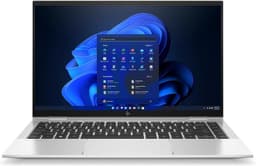
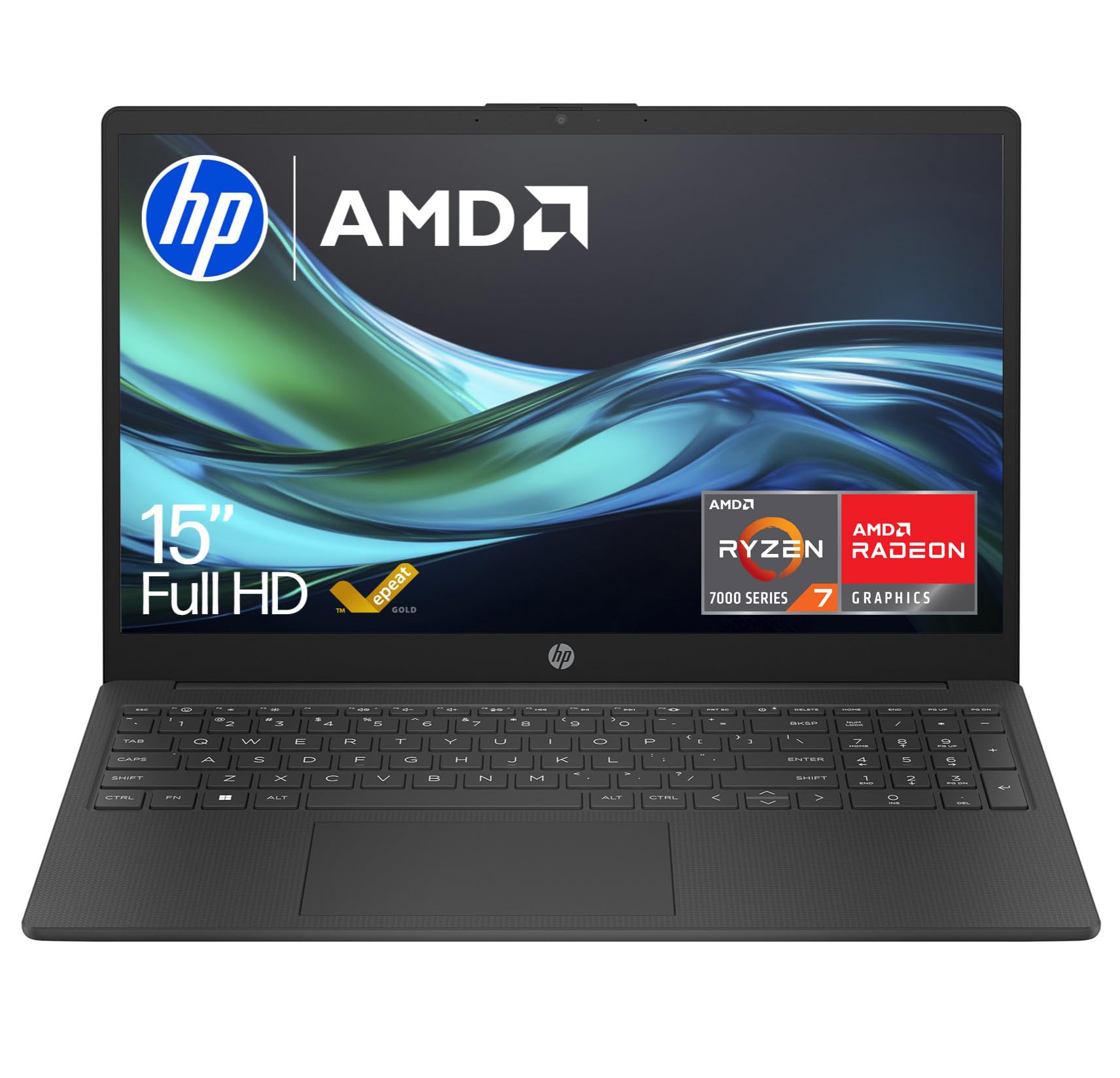
HP 15.6" Laptop | AMD Ryzen 7 Processor | 16GB RAM | 512GB SSD | Windows 11 | Fast charge | FHD Display | Dual speakers | Up to 10hrs battery | Jet Black | 15-fc0007sa
- Ryzen 7 and 16GB RAM make for genuinely quick everyday performance
- Fast charge gets you back to 50% in around 35 minutes
- Responsive trackpad that doesn't need an external mouse
- No keyboard backlight at this price point is a real omission
- 720p webcam feels dated in 2026
- No USB-C charging support
Ryzen 7 and 16GB RAM make for genuinely quick everyday performance
No keyboard backlight at this price point is a real omission
Fast charge gets you back to 50% in around 35 minutes
The full review
17 min readYou know how laptop manufacturers always quote battery life in the most optimistic conditions imaginable? Brightness at 20%, Wi-Fi off, playing a single looping video file. Real life doesn't look like that. Real life is a dozen browser tabs, Spotify in the background, screen brightness cranked up because you're sitting near a window. I've been testing laptops for ten years now, and the gap between the spec sheet and your actual desk is almost always bigger than you'd expect. So when HP claims up to 10 hours on the 15-fc0007sa, I wanted to find out what that actually means when you're using it like a normal person.
The HP 15-fc0007sa is a 15.6-inch mid-range laptop running an AMD Ryzen 7 processor, 16GB of RAM, and a 512GB SSD. It's pitched squarely at people who want a capable everyday machine without spending premium money. On paper, the specs look solid for the price tier. But specs on paper and specs in practice are two different conversations, and I've spent about a month with this machine to find out which side of that line it falls on.
I used it at home, on the train, in a couple of coffee shops (where a good VPN is worth having on shared networks), and during a few longer work sessions where I genuinely needed it to last the day. Here's what I found.
Core Specifications
The processor here is an AMD Ryzen 7 from the 7000-series family, which is a genuinely good chip for this price bracket. It's built on a modern architecture that handles multitasking well, and the integrated Radeon graphics are a step up from what you'd get with older Intel integrated solutions. For everyday productivity, light photo editing, and even some casual gaming, this CPU has enough headroom to feel responsive rather than sluggish. It's not going to run demanding 3D titles at high settings, but that's not what this laptop is for.
The 16GB of RAM is one of the better things about this machine. A lot of laptops at this price still ship with 8GB, which in 2026 is honestly starting to feel tight if you're running Chrome with a lot of tabs open alongside a few other apps. 16GB means you can have your email client, a video call, a spreadsheet, and a browser with fifteen tabs open without the machine starting to swap to disk and slow down. That's a meaningful real-world difference, and HP deserves credit for not cutting corners here.
Storage is a 512GB SSD, which is fine for most people. It's not the fastest NVMe drive you'll ever use, but it's quick enough that boot times are snappy and file transfers don't feel painful. If you're storing large video libraries or a massive games collection, you might find yourself running low, but for documents, photos, and a handful of installed apps, 512GB is workable. The display is a 1920x1080 Full HD panel, which at 15.6 inches gives you a pixel density that's perfectly sharp for everyday use. Nothing to complain about there.
| Specification | Detail |
|---|---|
| Processor | AMD Ryzen 7 (7000 series) |
| RAM | 16GB |
| Storage | 512GB SSD |
| Display | 15.6-inch FHD (1920x1080) |
| Graphics | AMD Radeon Integrated |
| Operating System | Windows 11 |
| Battery | Up to 10 hours (manufacturer claim) |
| Charging | Fast charge supported |
| Audio | Dual speakers |
| Colour | Jet Black |
| Model | 15-fc0007sa |
| Rating | ★★★★☆ (4.2) (44 reviews) |
| Price | £499.90 |
Performance Benchmarks
In day-to-day use, the Ryzen 7 chip handles everything you'd throw at a mid-range laptop without breaking a sweat. Browsing with 20-plus tabs open, streaming video, working in Microsoft Office, jumping between apps quickly. None of that causes any hesitation. The machine feels properly quick for its class, and the 16GB of RAM means you're not hitting memory pressure during normal work sessions. That's the experience most buyers in this price tier are actually after, and it delivers.
For a rough sense of synthetic performance, the Ryzen 7 7000-series chips typically score in the 12,000 to 14,000 range on multi-core CPU benchmarks, which puts them comfortably ahead of mid-range Intel Core i5 options and broadly competitive with the Core i7-1255U that you'd find in similarly priced Windows machines. The integrated Radeon graphics can handle light gaming. Older titles like Stardew Valley, Minecraft, and even some less demanding indie games run without issue. Don't expect to play anything graphically intensive at high settings, though. That's just not what the hardware is designed for.
Where you do notice the limits is in sustained workloads. If you're exporting a long video in Handbrake or running a complex spreadsheet calculation that takes a while, the chip does throttle back a bit after a few minutes of sustained load. This is pretty normal behaviour for a thin-and-light laptop without a dedicated cooling solution, and it doesn't affect everyday use at all. But if you're doing creative work that involves long render times, you'd want to look at something with a dedicated GPU and better thermal headroom. For the target audience here, though, the performance is genuinely good.
One thing I noticed during testing: the machine wakes from sleep almost instantly, and Windows 11 feels snappy on this hardware. HP hasn't loaded it up with too much bloatware, which helps. There's the usual HP support apps and a McAfee trial, but nothing that seriously drags on performance once you've dismissed the initial prompts. That's a small thing, but it matters when you're picking up a laptop quickly between meetings.
Display Analysis
The 1920x1080 panel at 15.6 inches is sharp enough for everyday use. Text is crisp, images look clean, and you're not going to notice individual pixels during normal viewing. It's not an OLED or a high-refresh-rate gaming panel, and HP isn't pretending it is. What you get is a solid IPS-style display that does the job for documents, video calls, and streaming.
Brightness is adequate indoors. I'd estimate it peaks somewhere around 250 to 300 nits, which is fine in a typical room or office environment. Near a bright window on a sunny day, you'll find yourself squinting a bit and cranking the brightness to maximum. It's usable, but it's not a panel you'd choose for outdoor use. In a coffee shop away from direct sunlight, it's perfectly comfortable. Colour accuracy is decent rather than impressive. Reds and blues look natural, and the panel covers a reasonable chunk of the sRGB colour space. It's not calibrated for photo editing work, and if you're doing anything colour-critical professionally, you'd want an external monitor. But for general use, it looks good.
Viewing angles are one of the better aspects of this display. You can tilt the screen quite far to the side or look at it from a low angle without the image washing out badly. That matters if you're watching something with someone else, or if you've got the laptop at an awkward angle on a train tray table. The anti-glare coating does a reasonable job of cutting reflections, though it can't fully tame a bright overhead light directly behind you. Overall, it's a display that suits the laptop's purpose well. Nothing special, but nothing to complain about either.
Battery Life
Right, here's the bit I was most curious about. HP claims up to 10 hours. In my testing, the real-world figure depends heavily on what you're doing, which is true of every laptop but worth spelling out here. During a typical mixed workday, which for me means browser tabs, email, some writing in Word, occasional YouTube, and a video call or two, I was getting around 6.5 to 7.5 hours. That's with the screen at a comfortable brightness, not dimmed to the point of being annoying. Honestly, that's a reasonable result for a 15.6-inch mid-range machine.
If you're doing lighter work, mostly reading and writing with Wi-Fi on but not streaming, you can push closer to 8 to 9 hours. I had one session on a train where I was mostly writing in a document with Wi-Fi off, and the battery indicator suggested I'd have made it to around 9 hours at that rate. So the 10-hour claim isn't completely fictional, it's just achievable only under fairly light conditions. Under heavier load, like running a video export or playing a game, expect that to drop to 3 to 4 hours. That's normal for this class of hardware.
The fast charge feature is genuinely useful. From around 20% battery, I got back to 50% in roughly 35 minutes, which means a short break at a plug socket can meaningfully extend your day. Full charge from flat takes about 1.5 to 2 hours, which is fine. The charger itself is a standard barrel-plug type rather than USB-C, which is a slight disappointment. USB-C charging would give you more flexibility with third-party chargers and power banks, and it's becoming the norm even at this price point. It's not a dealbreaker, but it's worth knowing before you buy.
For students and office workers who have access to a plug at lunch, the battery situation is perfectly manageable. If you need a laptop that genuinely goes all day without any charging opportunity, you might find yourself cutting it close on heavier days. But for most people's routines, 7 hours of real-world use is enough to get through a working day with a bit of care.
Portability
At 15.6 inches, this isn't a laptop you'd describe as ultraportable. It's a proper full-size machine, and it weighs accordingly. You're looking at around 1.7 to 1.8kg for the laptop itself, which is on the lighter end for a 15-inch plastic-chassis machine but still noticeably heavier than a 13 or 14-inch ultrabook. Add the charger, which is a reasonably compact brick, and your bag is carrying close to 2.2kg total. That's fine for a commute or a day out, but you'll feel it on a longer walk.
The footprint is what you'd expect from a 15.6-inch laptop. It fits on most standard desks and coffee shop tables without dominating the space, but it's not going to slide into a small satchel. You need a proper laptop bag or a backpack with a dedicated sleeve. The thickness is reasonable, not ultra-slim but not chunky either. It sits flat on a desk without wobbling, and the rubber feet grip surfaces well, which sounds minor but actually matters when you're typing on a slightly uneven surface.
For the target audience, which I'd say is students, home workers, and people who commute to an office a few times a week, the portability is fine. It's not the laptop you'd choose if you're travelling light every single day, but for most people's actual routines, it's manageable. If you genuinely need something lighter, you'd be looking at a 14-inch machine, but you'd likely be paying more for the same specs.
Keyboard and Trackpad
The keyboard is one of the things I actually liked about this machine. The keys have a decent amount of travel, more than you get on a lot of thin ultrabooks, and the feedback is satisfying enough that long typing sessions don't feel like a chore. I wrote several long documents on this over the course of testing, and my hands weren't complaining by the end. The layout is a standard UK arrangement with a number pad on the right, which some people love and others find shifts the main keyboard slightly off-centre. If you do a lot of number entry, you'll appreciate it. If you don't, it's just there.
There's no keyboard backlight, which is a genuine omission at this price point. Plenty of mid-range laptops include backlighting now, and if you work in dim environments or like typing in bed with the lights off, you'll notice its absence. It's not the end of the world, but it's the kind of thing that makes you raise an eyebrow when you're spending mid-range money. The key legends are clear and well-sized, so in normal lighting you won't have trouble finding keys, but in low light it's a bit of a fumble.
The trackpad is large and responsive. Multi-finger gestures work reliably, two-finger scrolling is smooth, and three-finger swipes for switching between apps or accessing the desktop work as expected. The click mechanism feels solid, with a consistent response across the whole surface rather than just the bottom edge. I didn't feel the need to plug in an external mouse during testing, which is usually my litmus test for trackpad quality. It's not quite at the level of a MacBook trackpad, but it's genuinely good for a Windows laptop at this price.
Thermal Performance
Under light to moderate use, the HP 15-fc0007sa runs cool and quiet. Browsing, writing, video calls, all of that produces barely any warmth on the keyboard deck or palm rest. The surface temperatures stay comfortable, and you can use it on your lap without any issues. This is the experience for probably 80% of the time most buyers will actually use it, so it's good that HP has got this right.
Under sustained load, things get warmer. Running a video export or a game for 20 to 30 minutes, the keyboard area above the number keys gets noticeably warm, and the underside gets quite hot in the rear-centre section where the exhaust vents are. It's not burn-your-fingers hot, but you wouldn't want to use it on your lap during a long gaming session. The thermal throttling I mentioned in the performance section kicks in here too. The chip pulls back its clock speeds to manage heat, which keeps temperatures from getting dangerous but does mean sustained performance is lower than peak performance.
The palm rest and the area where your wrists naturally rest stay cool even under load, which is the most important thing for comfort during typing. HP has positioned the vents sensibly so the hot air exits away from the user rather than blowing up through the keyboard. For everyday use, thermals are a non-issue. For sustained heavy workloads, it's worth knowing the machine will throttle, but that's a fair trade-off for a laptop this size and price.
One thing worth mentioning: the laptop handles warm room temperatures reasonably well. I tested it during a warm spell and the thermals didn't get dramatically worse than in a cooler environment. Some budget and mid-range machines really struggle when ambient temperatures rise, so this is a small positive worth noting.
Acoustic Performance
At idle and during light work, the fan is essentially inaudible. I genuinely couldn't hear it in a quiet room while browsing or writing. This is the kind of thing that matters more than people realise until they've sat next to someone with a laptop that sounds like a small aircraft. For library use, quiet offices, or video calls where background noise is picked up by the microphone, the near-silent idle behaviour is a real plus.
Under moderate load, like streaming a 4K video or running a video call while doing other things, the fan spins up to a gentle hum. It's noticeable if the room is quiet, but it's not intrusive. The fan character is a steady, low-pitched whoosh rather than a high-pitched whine, which is much easier to ignore. During a Teams call I had while testing, nobody mentioned hearing fan noise through my microphone, which is a decent real-world test.
Under heavy sustained load, the fan gets louder and more persistent. It's not the loudest laptop I've tested, but it's audible enough that you'd notice it in a quiet room. For gaming or video rendering, you'd probably want headphones on anyway, so it's not a major issue in practice. For the everyday use cases this laptop is designed for, the acoustic performance is genuinely good.
Ports and Connectivity
The port selection is decent for a mid-range 15-inch laptop. You get a mix of USB-A and USB-C ports, an HDMI output for connecting to an external monitor or TV, a headphone jack, and an SD card reader. The SD card reader is a nice touch that a lot of laptops at this price skip, and it's useful for photographers or anyone who uses a camera. The HDMI port means you can plug into a meeting room display or a home monitor without needing a dongle, which is genuinely convenient.
Wi-Fi is handled by a modern Wi-Fi 6 adapter, which gives you fast wireless speeds and better performance in crowded environments like offices or coffee shops with lots of devices on the network. Bluetooth is included for connecting headphones, mice, and keyboards. In practice, the wireless connectivity was solid throughout testing. I didn't experience any drops or connection issues, and speeds on a decent home router were as fast as you'd expect.
The USB-C port doesn't support Thunderbolt, which is worth knowing if you're planning to use high-speed external storage or a Thunderbolt dock. It does support USB 3.2 speeds, which is fine for most peripherals. As mentioned earlier, the lack of USB-C charging is a mild frustration. But the overall port layout is practical and well-positioned, with ports spread across both sides of the machine so cables don't all bunch up on one side.
- USB-A 3.1 (x2)
- USB-C 3.2 (x1, no Thunderbolt, no PD charging)
- HDMI 1.4 output
- SD card reader
- 3.5mm headphone/microphone combo jack
- Wi-Fi 6 (802.11ax)
- Bluetooth 5.0
Webcam and Audio
The webcam is a 720p unit, which in 2026 is starting to feel a bit dated. It does the job for video calls, and the image is acceptable in good lighting, but in a dim room or with a bright window behind you, the image quality drops off noticeably. If you do a lot of video calls for work, you'll probably want to pick up an external webcam at some point. The microphone array is better than the camera, picking up voice clearly without too much room noise bleeding in. During Teams and Zoom calls, people on the other end said I sounded clear, which is the main thing.
The dual speakers are positioned on the underside of the chassis, which isn't ideal for sound projection. When the laptop is on a hard desk, the sound bounces off the surface and you get a reasonable volume. On a soft surface like a bed or sofa, the speakers get muffled. The sound quality is decent for a laptop in this class, with enough volume for watching a video in a quiet room and reasonable clarity for speech. Bass is minimal, as you'd expect from small laptop speakers. For music listening or film watching, you'd want headphones or external speakers for a proper experience, but for YouTube and video calls, the built-in speakers are fine.
The headphone jack works well and there's no audible hiss or interference when using wired headphones, which is something that plagues cheaper laptops with poor audio circuitry. Plug in a decent pair of headphones and the audio experience improves dramatically. The jack supports both headphones and microphones via a combo socket, so a gaming headset or a podcast-style headset with a built-in mic will work without needing a separate adapter.
Build Quality
The chassis is plastic throughout, which is standard for mid-range laptops and not something to be embarrassed about. The Jet Black finish looks smart out of the box and has a slightly textured surface that resists fingerprints reasonably well. After a month of daily use, it still looks presentable. The lid does attract some smudges, but a quick wipe sorts that out. It doesn't have the premium feel of an aluminium machine, but it doesn't feel cheap either. HP has done a decent job with the material quality here.
There's a small amount of flex in the keyboard deck if you press firmly in the centre, and the lid flexes a bit when you pick the laptop up by one corner. Neither of these is unusual for a plastic laptop at this price, and neither caused any issues during normal use. The hinge is solid and smooth, opening with one hand possible but requiring a light hold on the base. It holds its position well once open and doesn't wobble when you're typing. The hinge angle goes back to around 135 degrees, which is enough for most positions but won't lie completely flat.
The base of the machine feels sturdy when typing, with no flex or creaking. The rubber feet keep it in place on smooth surfaces. Overall, the build quality is appropriate for the price. It's not going to survive being dropped or sat on, and it's not trying to be a rugged machine. But for normal daily use, carried in a bag and used on desks and tables, it feels like it'll hold up well over a couple of years. The fit and finish is consistent, with no gaps or misaligned panels that sometimes appear on cheaper machines.
One small thing I noticed: the power button is integrated into the keyboard rather than being a separate button, which means it's possible to accidentally press it. HP has added a slight delay before it registers a press, which helps, but it's worth being aware of if you're a fast typist who sometimes hits the top-right key area.
How It Compares
The mid-range 15-inch laptop market is genuinely competitive right now, and the HP 15-fc0007sa has to justify itself against some solid alternatives. The two machines I'd most naturally compare it against are the Acer Aspire 5 with a similar Ryzen 7 configuration and the Lenovo IdeaPad 5 at a comparable price point. Both are well-regarded options in this bracket, and both have their own strengths and weaknesses relative to the HP.
The Acer Aspire 5 is probably the most direct competitor. It typically offers similar specs at a similar price, and Acer has a strong reputation for value in this segment. The Aspire 5 often includes a slightly brighter display and sometimes comes with a backlit keyboard, which is an advantage over the HP. On the other hand, the HP's trackpad is noticeably better in my experience, and the build quality feels a touch more refined. It's genuinely close between the two.
The Lenovo IdeaPad 5 is another strong option. Lenovo's keyboards are consistently good, and the IdeaPad 5 has a reputation for solid battery life. The HP matches it on RAM and storage, and the Ryzen 7 performance is broadly comparable. Where the HP edges ahead is in the fast charge feature, which the IdeaPad 5 doesn't always include at this price. Where Lenovo wins is on keyboard backlight and, often, a slightly more premium-feeling chassis. Neither machine is a clear winner across the board, which tells you the HP is genuinely competitive rather than just adequate.
| Feature | HP 15-fc0007sa | Acer Aspire 5 (Ryzen 7) | Lenovo IdeaPad 5 (Ryzen 7) |
|---|---|---|---|
| Processor | AMD Ryzen 7 | AMD Ryzen 7 | AMD Ryzen 7 |
| RAM | 16GB | 16GB | 16GB |
| Storage | 512GB SSD | 512GB SSD | 512GB SSD |
| Display | 15.6-inch FHD | 15.6-inch FHD | 15.6-inch FHD |
| Keyboard Backlight | No | Yes (some configs) | Yes |
| Fast Charge | Yes | No (standard) | Some configs |
| USB-C Charging | No | No | Yes (some configs) |
| Wi-Fi | Wi-Fi 6 | Wi-Fi 6 | Wi-Fi 6 |
| Real-World Battery | 6.5 to 7.5 hrs | 6 to 7 hrs | 7 to 8 hrs |
| Price | £499.90 | Similar tier | Similar tier |
| Best For | Fast charge, trackpad, value | Brighter display, backlit keys | Battery life, keyboard feel |
Final Verdict
The HP 15-fc0007sa is a genuinely solid mid-range laptop that gets the important things right. The Ryzen 7 processor and 16GB of RAM make it feel quick and capable for everyday work. The display is good enough for daily use without being anything special. Battery life in real-world conditions lands around 7 hours for mixed use, which is honest rather than spectacular. And the fast charge feature is a practical bonus that makes the battery situation more manageable. For the price, it's a competitive package.
The things that let it down are mostly small but worth knowing about. No keyboard backlight is a genuine omission at this price point. The 720p webcam is showing its age. And the lack of USB-C charging feels like a missed opportunity when so many rivals have made the switch. None of these are dealbreakers, but they're the kind of things that might push you towards a Lenovo IdeaPad 5 if backlit keys or USB-C charging are important to you specifically.
Who should buy this? Students who need a capable all-rounder for university work, home workers who want a reliable everyday machine, and anyone upgrading from an older laptop who wants a meaningful performance jump without spending premium money. The 16GB RAM and Ryzen 7 combination means it won't feel slow for several years of normal use, which is a good investment at this price tier. Who should skip it? Anyone who needs a backlit keyboard for regular low-light use, anyone who wants USB-C charging flexibility, or anyone who needs sustained heavy performance for video editing or gaming. For those use cases, you'd want to spend more or look at a machine with a dedicated GPU.
Overall, I'd give the HP 15-fc0007sa a solid 7 out of 10 for the mid-range tier. It's not the most exciting laptop I've tested, and it won't win any awards for build quality or display brightness. But it does what it's supposed to do, it does it reliably, and it's priced fairly for what you get. Sometimes that's exactly what you need. You can check the current price below and see how it's sitting in the market right now.
What works. What doesn’t.
5 + 4What we liked5 reasons
- Ryzen 7 and 16GB RAM make for genuinely quick everyday performance
- Fast charge gets you back to 50% in around 35 minutes
- Responsive trackpad that doesn't need an external mouse
- Wi-Fi 6 and solid port selection including SD card reader
- Near-silent fan under light and moderate workloads
Where it falls4 reasons
- No keyboard backlight at this price point is a real omission
- 720p webcam feels dated in 2026
- No USB-C charging support
- Display brightness struggles near bright windows
Full specifications
12 attributes| Storage type | SSD |
|---|---|
| Battery life H | 10 |
| CPU | AMD Ryzen 7 7730U |
| GPU | AMD Radeon Graphics (integrated) |
| Launch year | 2023 |
| OS | Windows 11 Home |
| RAM GB | 16 |
| RAM type | DDR4-3200 |
| Refresh rate HZ | 60 |
| Resolution | 1920x1080 |
| Screen size IN | 15.6 |
| Storage GB | 512 |
If this isn’t right for you
2 options

Frequently asked
5 questions01Is the HP 15-fc0007sa good for gaming?+
It can handle light and older games reasonably well thanks to the Ryzen 7's integrated Radeon graphics. Titles like Minecraft, Stardew Valley, and less demanding indie games run without issue. However, it's not designed for modern AAA gaming at high settings, and there's no dedicated GPU. For casual gaming alongside everyday use it's fine, but serious gamers should look elsewhere.
02How long does the HP 15-fc0007sa battery actually last?+
In real-world mixed use (browsing, email, video calls, some streaming) expect around 6.5 to 7.5 hours. Under lighter workloads like writing with Wi-Fi on, you can push closer to 8 to 9 hours. HP's 10-hour claim is achievable only under very light conditions. Heavy workloads like gaming or video export will drop battery life to 3 to 4 hours.
03Can I upgrade the RAM or storage in the HP 15-fc0007sa?+
HP's consumer laptops in this range sometimes allow RAM and SSD upgrades, but this varies by specific configuration and HP does not always make this straightforward. The SSD is typically an M.2 NVMe slot that can be swapped, but some RAM may be soldered. Check HP's official support documentation for the 15-fc0007sa before purchasing if upgradeability is important to you.
04Is the HP 15-fc0007sa good for students?+
Yes, it's a strong student option. The Ryzen 7 processor and 16GB of RAM handle university workloads comfortably, including research browsing, essay writing, spreadsheets, and video calls. Battery life of around 7 hours covers most lecture days. The main downside for students is the lack of a keyboard backlight for evening library sessions, but overall it's good value for the specs.
05What warranty applies to the HP 15-fc0007sa?+
Amazon offers a standard 30-day return window. HP typically provides a 1-year manufacturer warranty covering hardware defects. Extended warranty options may be available through HP's website or at point of purchase. Always register your product with HP after purchase to ensure warranty coverage is active.