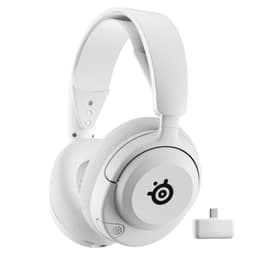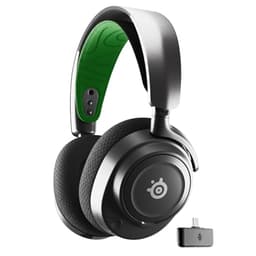
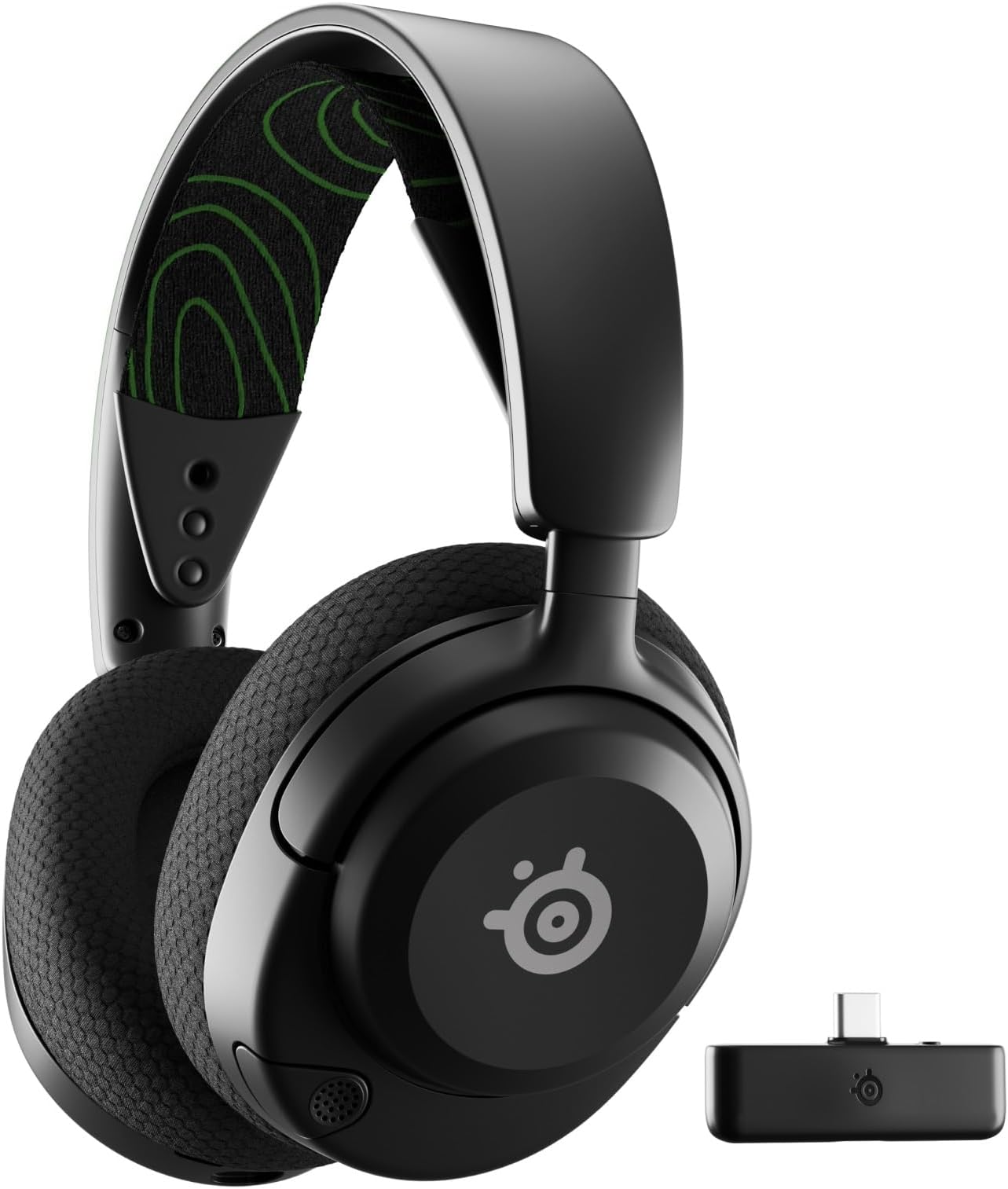
Gaming headsets make a lot of promises. Spatial audio, crystal-clear voice pickup, and comfort that holds up through a six-hour session are the holy trinity that every marketing team claims to have cracked. In practice, most headsets nail one of those three, fumble a second, and quietly ignore the third. After several weeks of testing the SteelSeries Arctis Nova 5X Wireless across competitive FPS sessions, long RPG evenings, and everything in between, I wanted to find out whether this upper mid-range wireless headset actually delivers on all three fronts, or whether it's just another well-marketed compromise.
The Arctis Nova 5X sits in a crowded bracket. Upper mid-range wireless headsets are where the real competition lives in 2026, and SteelSeries knows it. The Nova line has been SteelSeries' attempt to reclaim ground from Sony, Logitech, and Razer, and the 5X specifically targets Xbox and multi-platform players who want a single headset that works across their entire setup without a drawer full of dongles. That's an ambitious brief. Whether the hardware justifies the ambition is what this review is about.
I tested the Nova 5X across several weeks of daily use. That included ranked matches in competitive shooters where positional audio is genuinely critical, extended story game sessions where comfort becomes the deciding factor, and regular voice chat with teammates who gave me honest feedback on mic quality. I also ran it through my usual battery drain tests and spent time in SteelSeries' Sonar software to understand what the EQ and spatial audio tools actually do versus what they claim to do. Here's what I found.
Core Specifications
The Nova 5X is built around 40mm neodymium drivers, which is a standard size for this price bracket. SteelSeries quotes a frequency response of 20Hz to 20kHz, which is the full range of human hearing and, frankly, a spec that tells you almost nothing useful on its own. What matters is how flat or coloured that response is across the range, and I'll get into that in the sound signature section. The headset weighs in at around 282 grams, which is on the lighter side for a wireless headset with this feature set. Clamp force is moderate out of the box.
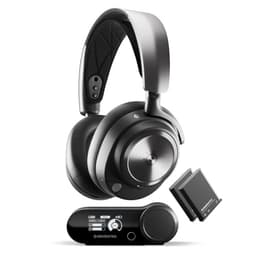
Connectivity is where the 5X earns its name. It supports simultaneous 2.4GHz wireless via a USB-A dongle and Bluetooth 5.3, meaning you can have your PC or Xbox connected on the low-latency wireless link while your phone sits on Bluetooth in the background. The headset handles both streams at once, mixing them together, which is genuinely useful if you want Discord on PC and game audio from a console simultaneously. The USB-C charging port is a welcome choice over proprietary connectors, and the headset also works passively via a 3.5mm jack if the battery dies mid-session.
Build quality feels solid without being flashy. There's no RGB here, which I consider a feature rather than an omission. The headband uses SteelSeries' ski goggle-style suspension system, the earcups are wrapped in a fabric-and-foam combination, and the retractable microphone tucks away cleanly into the left earcup. The overall aesthetic is understated and professional. It doesn't scream "gaming headset" in a meeting, which some people will care about.
| Specification | Detail |
|---|---|
| Driver Size | 40mm neodymium |
| Frequency Response | 20Hz to 20kHz |
| Wireless Protocol | 2.4GHz + Bluetooth 5.3 simultaneous |
| Microphone | Retractable bidirectional with ClearCast Gen 2 |
| Battery Life (rated) | Up to 60 hours (2.4GHz), 40 hours (Bluetooth) |
| Charging | USB-C |
| Weight | Approx. 282g |
| Compatibility | Xbox, PC, PS5 (via 3.5mm), Switch, Mobile |
| Earcup Material | AirWeave fabric with memory foam |
| Connection (wired fallback) | 3.5mm analogue jack |
| Price | £99.98 |

Audio Specifications
The 40mm drivers in the Nova 5X are dynamic drivers, not planar magnetic. That's the expected choice at this price point. Dynamic drivers use a voice coil and magnet to move a diaphragm, and they're well-suited to gaming because they can produce impactful bass transients without the power requirements that planar designs demand. SteelSeries hasn't published an impedance figure for the Nova 5X in their standard spec sheet, but based on the wireless-only design and the way the headset behaves on the 3.5mm jack, it's almost certainly in the low-impedance range, likely around 32 ohms, which means it'll drive fine from any source without needing a dedicated amplifier.
Sensitivity is another figure SteelSeries keeps close to their chest publicly, but in practical terms the Nova 5X gets loud enough at moderate volume levels on both wireless and wired connections. I never found myself pushing the volume slider to uncomfortable extremes to get a usable listening level, which is the real-world sensitivity test that matters. The frequency response curve, based on my listening tests across reference tracks and in-game audio, shows a mild V-shape with a lift in the sub-bass region and a presence peak somewhere in the upper midrange. It's not a flat, reference-style response, but it's not the exaggerated bass-cannon tuning you get from some competitors either.
The ClearCast Gen 2 microphone uses a bidirectional pickup pattern. Bidirectional microphones pick up sound from the front and rear of the capsule while rejecting sound from the sides, which SteelSeries uses to implement passive noise cancellation by placing the rear pickup facing away from the speaker's mouth to capture ambient noise and subtract it. This is a different approach to the simple cardioid capsules most gaming headsets use, and it does produce measurably better background noise rejection in practice. I'll cover the mic in detail in its own section.
Sound Signature
The Nova 5X has a mild V-shaped tuning. Bass is present and has some weight to it, particularly in the sub-bass region where explosions and low-frequency environmental sounds live. Mids are slightly recessed compared to the bass and treble, which is a common consumer tuning choice because it makes music sound more exciting and cinematic content feel more impactful. Treble has a presence peak that adds clarity to high-frequency detail like footsteps, reload sounds, and dialogue. It's not a harsh or sibilant tuning, but it's not neutral either.
For competitive gaming, this tuning is a reasonable compromise. The treble lift helps with positional audio cues in FPS games. Footsteps in particular come through with good clarity, and directional gunfire has enough high-frequency content to be easily located. The recessed mids don't hurt competitive play much because most critical audio cues in games like this sit in the bass and treble bands anyway. Where the mid-recession becomes more noticeable is in story games with heavy dialogue, where voices can occasionally feel slightly thin or pushed back in the mix.
For music listening, the V-shape is broadly enjoyable for genres that suit it. Electronic, hip-hop, and anything with prominent bass and clear highs sounds good. Acoustic music, jazz, and classical suffer a bit from the mid-recession because those genres rely heavily on the midrange for instrument body and vocal warmth. That said, this is a gaming headset, not a pair of audiophile cans, and the tuning makes sense for its primary use case. If you want a flatter response, the Sonar software EQ can pull the bass down and push the mids up, and I found a custom EQ profile that got the Nova 5X sounding considerably more balanced for music listening without sacrificing too much gaming performance.
Sound Quality
Soundstage on the Nova 5X is decent for a closed-back wireless headset. It's not going to fool you into thinking you're wearing open-backs, but there's enough width and depth to the presentation that positional audio in games feels natural rather than cramped. In competitive shooters, I could reliably distinguish left from right and had a reasonable sense of distance on audio cues. Front-to-back imaging is the weak point, as it is with almost every headset that doesn't use head-related transfer function processing, but the Nova 5X's virtual surround implementation in Sonar helps here more than I expected.
Bass extension is good. The low end reaches down into sub-bass territory with genuine weight, and bass transients, the sharp impact of a gunshot or an explosion, are rendered with decent speed. There's no noticeable bloat or one-note quality to the bass, which is a common problem with cheaper headsets that try to sound impressive by just boosting the low end indiscriminately. The Nova 5X's bass is controlled enough that it doesn't muddy the midrange, even if the mids are already slightly recessed in the tuning.
Treble clarity is one of the Nova 5X's genuine strengths. High-frequency detail is rendered cleanly without the harshness or sibilance that plagues some headsets with aggressive treble boosts. In games, this translates to footsteps that are easy to hear and locate without being fatiguing over long sessions. In music, cymbals and hi-hats have good shimmer without becoming piercing. I ran several hours of competitive play across multiple evenings and never experienced the ear fatigue that I associate with poorly tuned treble. That's a meaningful data point for anyone planning long gaming sessions.
Microphone Quality
The ClearCast Gen 2 microphone is one of the better gaming headset mics I've tested at this price point. The retractable design means it tucks away completely when not in use, which is useful if you're switching between gaming and a video call where you'd rather use a different mic. When deployed, it sits at a fixed position close to the corner of the mouth, which is a good placement for voice pickup. You can't adjust the angle much, but the fixed position is actually well thought out and most people will find it works without fiddling.
Voice clarity is good. My teammates consistently reported that I sounded clear and natural, without the tinny, telephone-quality character that plagues many gaming headset mics. The bidirectional capsule design does a real job of rejecting keyboard noise and ambient room sound. I tested this specifically by typing loudly during a voice chat session, and the mic handled it considerably better than a standard cardioid capsule would. Background noise from a nearby fan was also well-suppressed. It's not studio-quality noise rejection, but it's noticeably better than average for a gaming headset.
One limitation worth flagging: the microphone doesn't have a physical mute button on the boom itself. Muting is handled either by retracting the mic into the earcup (which does mute it automatically) or by pressing the mute button on the earcup. The retract-to-mute mechanism is clever and quick once you're used to it, but if you're coming from a headset with a flip-to-mute boom, the muscle memory adjustment takes a few days. The mic also benefits from the Sonar software's noise gate and EQ settings, which I'd recommend configuring before your first session. The default mic settings are fine, but a small amount of tweaking gets noticeably better results.
Comfort and Build
Comfort is where the Arctis Nova line has always had a genuine advantage, and the 5X continues that tradition. The ski goggle-style headband suspension distributes weight across the top of the head rather than concentrating it on a single pressure point, and after several weeks of testing I can confirm it works. I wore the Nova 5X for sessions of four to five hours without the headband discomfort that I regularly experience with traditional padded headbands. The suspension system adjusts automatically to head size, which also means there's no fiddly slider to get right before each session.
The AirWeave fabric earcups are a good choice for long sessions. Fabric breathes better than leatherette, which matters if you're gaming in a warm room or during summer months. The memory foam underneath the fabric provides enough cushioning that the earcups don't feel hard against the ears, and the oval shape accommodates a range of ear sizes without the cups pressing directly on the ears. I do wear glasses, and the Nova 5X was comfortable with them on. The earcup foam is soft enough that it doesn't create significant pressure points where the glasses arms pass through. Not every headset manages this, so it's worth calling out.
Build quality is solid. The plastic used for the earcup housings feels dense and well-finished, and the headband mechanism has no flex or creak. The retractable mic mechanism feels positive and secure. My one build quality note is that the earcup rotation is limited compared to some competitors, which means the headset doesn't fold flat for travel. It's not a deal-breaker for a home gaming headset, but if you're planning to carry it in a bag regularly, it's something to be aware of. The overall impression is of a headset built to last, not one that's going to start rattling after six months of daily use.

Connectivity
The dual wireless implementation is the Nova 5X's most distinctive technical feature. The 2.4GHz connection uses a USB-A dongle that pairs instantly and maintains a stable connection. I tested the wireless range across a typical living room and into an adjacent room, and the connection held without dropout at distances that cover any realistic gaming scenario. The 2.4GHz link is the low-latency path, and SteelSeries claims latency low enough for competitive gaming. In practice, I couldn't detect any audio lag during competitive play, which is the only test that actually matters.
Bluetooth 5.3 runs simultaneously with the 2.4GHz connection, and the headset mixes both audio streams together. This means you can have your game audio coming in on 2.4GHz from your Xbox or PC while Discord or a phone call comes through on Bluetooth from your phone. The mixing is handled in hardware, and it works well. You can adjust the balance between the two sources using the Sonar software on PC. The Bluetooth connection is noticeably higher latency than 2.4GHz, which is expected and fine for music or voice calls but means you wouldn't want to use Bluetooth for game audio itself.
The USB-C charging port doubles as a wired audio connection on PC via the SteelSeries Sonar software, and there's also a 3.5mm jack for analogue wired connection to any device. The 3.5mm option is particularly useful for PS5, where the USB dongle works but some users prefer the direct connection for simplicity. Pairing the dongle to a new device is straightforward: hold the button on the dongle, hold the button on the headset, done. I had no issues with the pairing process across multiple devices during testing. The dongle is small enough that it doesn't block adjacent USB ports, which is a small but appreciated detail.
Battery Life
SteelSeries rates the Nova 5X at up to 60 hours on 2.4GHz wireless and 40 hours on Bluetooth. Those are headline figures, and like all battery life claims they assume specific conditions that don't always match real-world use. I tested battery life at my typical gaming volume, which is moderate rather than loud, with the default EQ profile active and the mic in use. Under those conditions, I got through several long gaming sessions across multiple days before needing to charge, which is consistent with the upper end of the rated figures. The 60-hour claim is plausible if you're not running the mic constantly and keep the volume sensible.
Charging via USB-C is quick. From a low battery warning to a full charge took around two hours in my testing, which is fast enough that an overnight charge before a gaming day is never going to leave you short. The headset also supports quick charge functionality: a short charge gives you several hours of use, which is useful if you've forgotten to charge and need to get into a session quickly. The battery indicator is shown in the Sonar software on PC, and there's an audio cue when the battery gets low. There's no LED battery indicator on the headset itself, which is a minor omission but not a significant one given the software readout.
One thing I'll note: the rated 40-hour Bluetooth figure is lower than the 2.4GHz figure, which is slightly counterintuitive since Bluetooth typically consumes less power than 2.4GHz. SteelSeries hasn't explained this publicly, but my suspicion is that the simultaneous dual-wireless operation when both connections are active draws more power overall, and the 40-hour figure reflects a Bluetooth-only scenario with the 2.4GHz radio also active in standby. In practice, if you're using both connections simultaneously, expect battery life somewhere between the two rated figures. Still very good for a wireless gaming headset.
Software and Customisation
SteelSeries Sonar is the companion software for the Nova 5X on PC, and it's one of the better gaming audio applications I've used. It's available as a standalone download from the SteelSeries GG platform and doesn't require a full GG installation if you don't want it, though GG is the launcher. The interface is clean and logically organised. EQ is presented as a parametric-style curve editor with preset options and full manual control, which is more flexible than the simple slider-based EQ you get in some competitor software. There are separate EQ profiles for game audio, chat audio, media, and microphone, which is a sensible separation.
The virtual surround implementation in Sonar is called Sonar Spatial Audio, and it's based on head-related transfer function processing. Unlike the generic "7.1 surround" marketing that most gaming headset software uses, Sonar's spatial audio actually attempts to simulate realistic sound positioning using HRTF convolution. The result is noticeably better than the typical software surround gimmick. Front-to-back imaging improves meaningfully with it enabled, and the overall soundstage feels wider without the unnatural phasiness that bad virtual surround processing introduces. I used it enabled for competitive play and found it genuinely useful for locating audio cues.
Mic monitoring, sometimes called sidetone, is adjustable in Sonar, which is a feature I use regularly. Hearing your own voice through the headset at a controlled level makes it easier to speak at a natural volume during long sessions. The noise gate for the microphone is also configurable, with threshold and release settings that let you dial in how aggressively background noise is suppressed. Firmware updates for the headset are handled through GG automatically. I received one firmware update during the testing period, which applied without any issues. The software is Windows-only, which is a limitation for Mac users, but the headset works fine without it on any platform.
Compatibility
The Nova 5X is marketed primarily at Xbox players, and the 2.4GHz dongle works natively with Xbox Series X and S via the USB-A port. On Xbox, the headset pairs quickly and audio works without any additional configuration. The Sonar software EQ settings don't carry over to Xbox since the software is PC-only, but the headset has a default tuning that works well enough on console without software adjustment. For Xbox players who also use PC, the ability to keep the same dongle plugged into the Xbox and switch to PC via Bluetooth, or vice versa, is a practical workflow that I used regularly during testing.
PS5 compatibility is via the 3.5mm jack or the USB dongle, though the USB dongle on PS5 works for audio without the full Sonar feature set. The 3.5mm connection to the DualSense controller is the simplest approach for PS5 users and works without any setup. Nintendo Switch works the same way, either via the 3.5mm jack in handheld mode or via the USB dongle in docked mode. Mobile devices connect via Bluetooth, and the simultaneous dual-wireless means you can have your Switch on 2.4GHz and your phone on Bluetooth at the same time, which is a genuinely useful combination for handheld gaming with background music or podcast audio.
PC compatibility is the most fully featured scenario. Windows users get the full Sonar software experience with parametric EQ, spatial audio, mic processing, and firmware updates. The headset appears as a standard audio device in Windows and doesn't require any drivers beyond what Windows installs automatically. I tested it on Windows 11 without any compatibility issues. Linux users will find the headset works as a standard USB audio device without software support, which is fine for basic use. Mac users get the hardware without the software, which means no EQ or spatial audio customisation, but the headset functions normally for audio output and microphone input.
How It Compares
The Nova 5X's main competition at this price point comes from the Sony INZONE H7 and the Logitech G535. The INZONE H7 is Sony's upper mid-range wireless headset, designed primarily for PS5 but with PC compatibility. It has excellent spatial audio processing via the PlayStation Tempest engine when used with PS5, and its sound quality is strong. But it's a less versatile multi-platform option than the Nova 5X, and its microphone is a fixed boom rather than retractable, which some people prefer and others find bulky. The INZONE H7 also lacks simultaneous dual-wireless, which is a meaningful feature gap if you use multiple devices.
The Logitech G535 is a lighter, simpler wireless headset that competes on comfort and battery life. It's genuinely light, around 236 grams, which gives it a comfort advantage for users who are particularly sensitive to headset weight. But its audio quality is more modest than the Nova 5X, and its microphone is a fixed boom that doesn't retract. The G535 also lacks Bluetooth, making it a single-device wireless headset. For pure PC gaming, it's a reasonable alternative, but the Nova 5X's multi-platform flexibility and better audio performance justify the price difference for most buyers.
The Razer BlackShark V2 Pro is another competitor worth mentioning. It has strong audio performance and a good microphone, and Razer's THX Spatial Audio is one of the better virtual surround implementations available. But the BlackShark V2 Pro is typically priced higher than the Nova 5X, and its earcup comfort over very long sessions is slightly behind the Arctis suspension system in my experience. If you're a Razer ecosystem user, it's worth considering, but for most buyers the Nova 5X offers a better overall package at a more competitive price point.
| Feature | SteelSeries Arctis Nova 5X | Sony INZONE H7 | Logitech G535 |
|---|---|---|---|
| Wireless Protocol | 2.4GHz + Bluetooth 5.3 (simultaneous) | 2.4GHz + Bluetooth | 2.4GHz only |
| Battery Life (rated) | Up to 60 hours | Up to 40 hours | Up to 33 hours |
| Microphone Type | Retractable bidirectional | Fixed boom | Fixed boom |
| Weight | ~282g | ~299g | ~236g |
| Earcup Material | AirWeave fabric | Leatherette | Leatherette |
| Software (PC) | SteelSeries Sonar (full EQ + spatial) | INZONE Hub | Logitech G Hub |
| Xbox Native Support | Yes (USB dongle) | No (PS5 focused) | Yes (USB dongle) |
| Charging | USB-C | USB-C | USB-C |
| Price | £99.98 | Upper mid-range | Mid-range |

Final Verdict
After several weeks of daily testing, the SteelSeries Arctis Nova 5X Wireless Gaming Headset earns a genuine recommendation. It doesn't do everything perfectly, but it does more things well than most headsets at this price point, and the things it does well are the things that actually matter for day-to-day gaming use. The audio quality is good, the microphone is better than average, the comfort is excellent over long sessions, and the simultaneous dual-wireless implementation is a practical feature that I found myself using regularly rather than treating as a marketing bullet point.
The sound signature won't satisfy audiophiles looking for a flat reference response, and the Sonar software is Windows-only, which limits the customisation options for console-only players. The earcup rotation limitation means it's not ideal for travel. And if you're a PS5-primary player, the Sony INZONE H7 might serve you better given its tighter integration with the PlayStation ecosystem. But for Xbox and PC players, or anyone who moves between multiple platforms and wants a single headset that handles all of them without fuss, the Nova 5X is one of the strongest options in the upper mid-range bracket right now.
The SteelSeries Arctis Nova 5X Wireless Gaming Headset represents solid value in a competitive market. The combination of 60-hour battery life, simultaneous dual-wireless, a genuinely good retractable microphone, and the Arctis suspension comfort system is a package that's hard to match at this price. I'd give it a 8.5 out of 10. It's not flawless, but it's the kind of headset you buy and stop thinking about, which is exactly what a good gaming peripheral should be. Check the current UK price below and see if it fits your budget.
What works. What doesn’t.
5 + 3What we liked5 reasons
- Simultaneous 2.4GHz and Bluetooth 5.3 dual-wireless works as advertised
- ClearCast Gen 2 mic has noticeably better noise rejection than most gaming headset mics
- Arctis suspension headband is genuinely comfortable over 4-5 hour sessions
- 60-hour rated battery life holds up well in real-world testing
- Sonar software EQ and HRTF spatial audio are among the better implementations available
Where it falls3 reasons
- V-shaped tuning means recessed mids; voices can sound slightly thin in story games
- Sonar software is Windows-only, limiting EQ customisation for console players
- Earcups don't fold flat, making it less practical for travel or storage
Full specifications
9 attributes| Connectivity | 2.4GHz wireless, Bluetooth |
|---|---|
| Microphone | clearcast gen2 |
| Noise cancellation | false |
| Battery life H | 60 |
| Driver size MM | 40 |
| Microphone type | retractable boom |
| Platforms | Xbox, PC, PS5, Switch, Mobile |
| Spatial audio | true |
| Type | over-ear |
If this isn’t right for you
2 options 8.0 / 10
SteelSeries Arctis Nova 5 Wireless - Wireless Gaming Headset for PC - Compatible with PC, PS5, Switch & more - Mobile App Control - 60 HR Battery with Fast Charge - 2.4GHz/Bluetooth - White
£107.00 · SteelSeries
 8.0 / 10
HyperX Cloud III S – Wireless Gaming Headset | Multi-Platform, 2.4GHz, Bluetooth, Battery up to 120 Hrs 2.4GHz / 200 Hrs Bluetooth, 53mm Angled Drivers, 10mm Detachable Mic, Customizable – White
£127.99 · HyperX
Frequently asked
5 questions01Is the SteelSeries Arctis Nova 5X good for competitive gaming?+
Yes. The Nova 5X's treble-lifted tuning helps with positional audio cues like footsteps and directional gunfire, and the Sonar Spatial Audio HRTF processing meaningfully improves front-to-back imaging compared to the headset's stereo mode. The 2.4GHz wireless connection has low enough latency that I couldn't detect audio lag during competitive play. It's a solid choice for FPS and battle royale players.
02Does the SteelSeries Arctis Nova 5X have a good microphone?+
The ClearCast Gen 2 retractable microphone is one of the better gaming headset mics at this price point. The bidirectional pickup pattern provides noticeably better background noise rejection than standard cardioid capsules, and voice clarity is good enough that teammates consistently reported natural, clear audio during testing. It benefits from some configuration in the Sonar software, but the default settings are acceptable.
03Is the SteelSeries Arctis Nova 5X comfortable for long gaming sessions?+
Yes, comfort is one of the Nova 5X's strongest points. The ski goggle-style suspension headband distributes weight evenly across the top of the head rather than concentrating pressure on a single point, and the AirWeave fabric earcups breathe well enough to stay comfortable over several hours. I wore it for sessions of four to five hours without significant discomfort, and it's also reasonably glasses-friendly.
04Does the SteelSeries Arctis Nova 5X work with PS5 and Xbox?+
The Nova 5X works natively with Xbox Series X and S via the USB-A dongle. For PS5, it works via the 3.5mm jack connected to the DualSense controller, or via the USB dongle for audio without the full Sonar software feature set. It also works with Nintendo Switch in both handheld and docked modes. The headset is primarily marketed at Xbox players but is genuinely multi-platform.
05What warranty applies to the SteelSeries Arctis Nova 5X in the UK?+
Amazon offers 30-day returns for items purchased through Amazon UK. SteelSeries typically provides a 1-2 year manufacturer warranty on their headsets. Check the SteelSeries website or your purchase confirmation for the specific warranty terms applicable to your purchase.