Our editors evaluated 2 Cpu options against the criteria readers actually weigh up: price, real-world performance, build quality, warranty, and UK availability. Picks lean toward what we'd recommend to a friend buying today, not specs-on-paper winners.
Hands-on contextEditor notes from individual reviews, not press releases.
Live UK pricingRefreshed from Amazon UK twice daily.
No paid placementsAffiliate commission doesn't change what wins.
Finding the best CPUs under £100 in the UK is genuinely tricky. The market is cluttered with ageing silicon, misleading listings, and chips that look great on paper but disappoint in practice. So we've narrowed it down to three real contenders: the AMD Ryzen 3 3200G, the AMD Ryzen 5 4500, and the Intel Core i7-6700K. Each sits at or just below the £100 mark, but they represent very different approaches to budget computing. One has integrated graphics. One packs six cores and twelve threads into a modern architecture. And one is a decade-old overclocking favourite that still turns up in second-hand builds. Which one is actually worth your money? Read on.
CPU Performance: Which Handles Real Workloads Best?
Winner: AMD Ryzen 5 4500
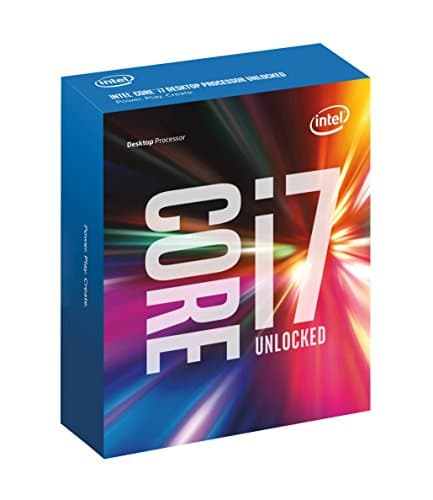
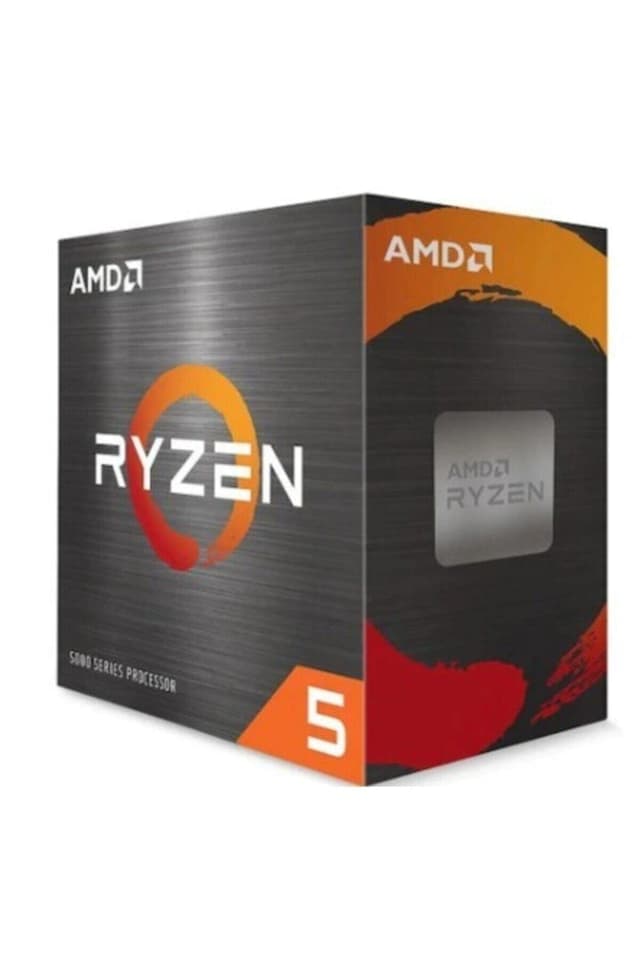
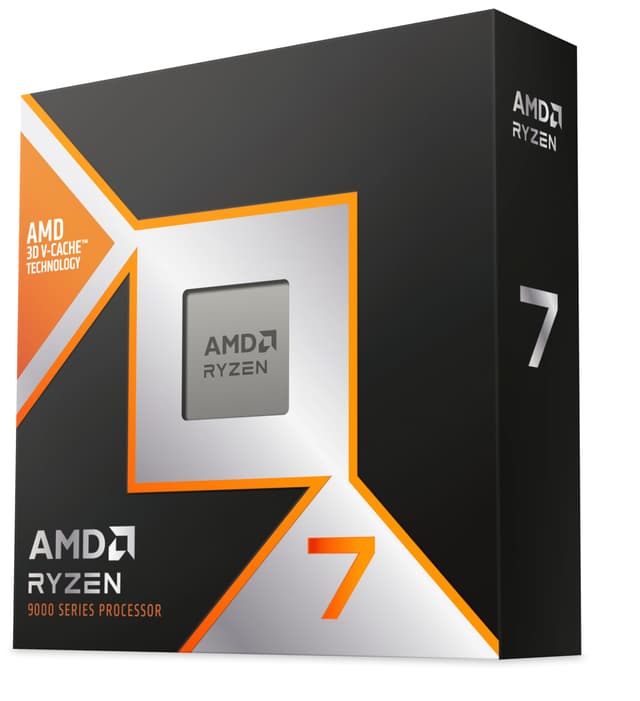
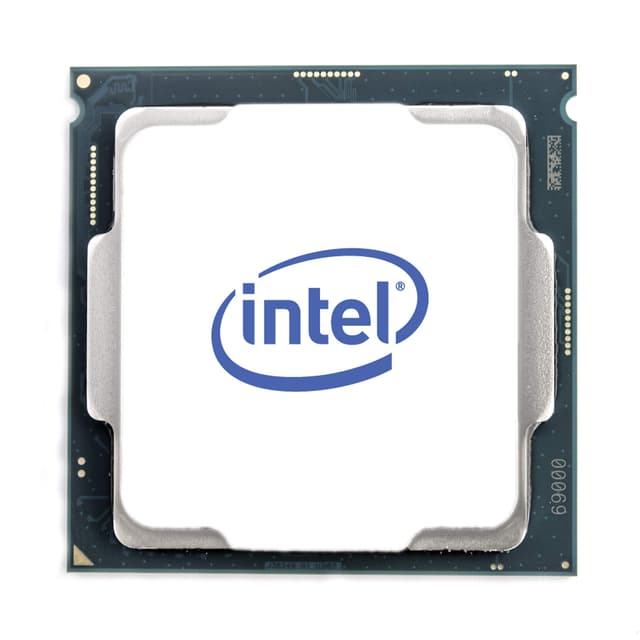
This is where the comparison gets interesting. On paper, the Intel Core i7-6700K has the highest base clock at 4.0 GHz and a Turbo Boost ceiling of 4.2 GHz. But raw clock speed stopped being the whole story a long time ago. The AMD Ryzen 5 4500 runs 6 cores and 12 threads on AMD's Zen 2 architecture built on a 7nm process. The i7-6700K is 14nm Skylake from 2015. That's a full decade of architectural improvements separating them.
In multi-threaded workloads, the Ryzen 5 4500 is simply in a different league. Cinebench R23 multi-core scores for the 4500 sit around 8,500 to 9,000 points. The i7-6700K, with its 4 cores and 8 threads, typically lands around 4,500 to 5,000. That's roughly a 90% improvement in multi-threaded throughput. For video encoding, compiling code, or running multiple applications at once, the difference is very real.
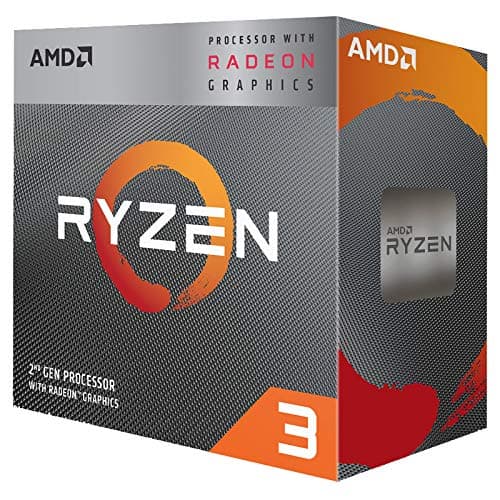
The AMD Ryzen 3 3200G, with 4 cores and 4 threads on Zen+ (12nm), scores around 3,500 to 4,000 in Cinebench R23 multi-core. It's the weakest of the three in raw CPU performance. Single-threaded performance is closer across all three chips, with the i7-6700K still competitive here thanks to its high clocks, but the 4500's Zen 2 IPC improvements keep it ahead even in single-core tasks.
Here's the thing: if you're building a PC for gaming, streaming, or any kind of content work, the Ryzen 5 4500's thread count matters. Running a game while Discord, a browser, and a background process are all active? Four threads on the 3200G starts to feel tight. The 4500 handles it without breaking a sweat.
This is the one area where the AMD Ryzen 3 3200G has a clear, undisputed advantage. It's the only chip in this comparison with a genuinely usable integrated GPU. The Radeon Vega 8 iGPU has 8 compute units running at up to 1250 MHz. It's not going to run Cyberpunk 2077 at Ultra, but it handles 1080p gaming in older and less demanding titles, and it's perfectly fine for everyday desktop use, media playback, and even some light creative tasks.
The Intel Core i7-6700K does include Intel HD Graphics 530, but it's noticeably weaker than the Vega 8. The HD 530 has 24 execution units compared to the Vega 8's 512 shader processors, and real-world gaming benchmarks consistently show the Vega 8 pulling 30 to 50% higher frame rates in titles like CS:GO or League of Legends at 1080p low settings. So even if you're considering the i7-6700K as a stopgap without a GPU, the 3200G is the better choice for that use case.
The Ryzen 5 4500 has no integrated graphics at all. Full stop. If you buy it without a dedicated GPU, you won't get a display output. That's not a flaw exactly, it's a design choice that freed up die space for more CPU cores, but it does mean the 4500 is only suitable if you already have or plan to buy a discrete graphics card.
So the 3200G wins this category by default, and it wins it convincingly. For anyone building a budget PC without a GPU, or wanting a temporary solution while saving for a graphics card, the Vega 8 is a proper useful feature. The i7-6700K's HD 530 is a distant second, and the 4500 doesn't compete here at all.
Platform and Upgrade Path: Which Socket Makes More Sense?
Winner: AMD Ryzen 5 4500
Both AMD chips use the AM4 socket, which is a significant advantage over the Intel option. AM4 has been AMD's primary consumer platform since 2016 and supports everything from budget A320 boards right up to X570. More importantly, AM4 motherboards are widely available new and second-hand in the UK, and they're well understood by builders at every level.
The Ryzen 5 4500 also supports PCIe 4.0, which means faster NVMe SSD speeds if you pair it with a compatible B550 or X570 board. The 3200G is limited to PCIe 3.0. Both support DDR4, but the 4500 officially supports up to DDR4-3200 versus the 3200G's DDR4-2933. Faster memory matters for gaming performance, and the 4500 benefits more from tight, fast RAM.
The Intel Core i7-6700K uses LGA1151, specifically the first-generation variant. And here's where it gets complicated: LGA1151 was used for both Skylake (6th gen) and Kaby Lake (7th gen), but not 8th or 9th gen chips, which used a physically identical socket but with different electrical requirements. So your upgrade options from the i7-6700K are essentially limited to other 6th and 7th gen Intel chips. That's a dead-end platform in 2026. New LGA1151 motherboards are no longer in production, and finding a decent used one adds cost and risk to the build.
The Ryzen 5 4500 wins this category. The AM4 ecosystem is broader, better supported, and offers more upgrade flexibility. If you start with a B550 board and a 4500, you could theoretically drop in a Ryzen 7 5800X or even a Ryzen 9 5900X later without changing your motherboard. That's real long-term value.
Power Efficiency and Thermals: Running Cool on a Budget
Winner: AMD Ryzen 5 4500
Both AMD chips carry a 65W TDP, which is genuinely modest. The Intel Core i7-6700K has a rated TDP of 91W at stock, and that number climbs considerably when you start overclocking. Real-world power draw measurements show the i7-6700K pulling 100 to 130W under sustained load, compared to the Ryzen 5 4500's 65 to 75W under similar conditions. Over a year of daily use, that difference adds up on your electricity bill.
The Ryzen 5 4500's 7nm process node is the key factor here. Smaller transistors mean less heat and less power for the same amount of work. The i7-6700K is on Intel's 14nm process, which was already showing its age by 2018. The Ryzen 3 3200G sits on 12nm Zen+, which is more efficient than the i7-6700K but not as refined as the 4500's 7nm design.
Both AMD chips include the Wraith Stealth cooler in the box. It's not the most impressive cooler ever made, but it's adequate for stock operation and keeps noise levels reasonable. The i7-6700K ships with no cooler at all. As a K-series unlocked chip, Intel assumed buyers would want an aftermarket solution. Budget a minimum of £20 to £30 for a decent 120mm tower cooler if you go the Intel route, which pushes its effective cost well above the £100 mark.
The Ryzen 5 4500 wins here. Lower TDP, a more efficient process node, and a bundled cooler make it the most thermally sensible choice in this comparison. The i7-6700K's higher power draw and missing cooler are genuine costs that the spec sheet doesn't make obvious.
Assuming you're pairing any of these chips with a dedicated GPU, the Ryzen 5 4500 is the strongest gaming CPU here. Modern games increasingly benefit from higher thread counts, and the 4500's 12 threads give it a meaningful edge over both the 3200G (4 threads) and the i7-6700K (8 threads).
In CPU-limited gaming scenarios, benchmarks from sources like Tom's Hardware consistently show Zen 2 chips outperforming equivalent Skylake silicon by 15 to 25% in titles like Fortnite, Warzone, and Elden Ring. The i7-6700K can still hold its own in older or less demanding games, but in titles that stress the CPU heavily, the 4500's IPC advantage and extra threads show clearly.
The Ryzen 3 3200G, without a dedicated GPU, relies on its Vega 8 iGPU for gaming. At 1080p low settings in CS:GO, expect around 60 to 80 fps. That's playable, but it's a different conversation to what the 4500 can do with even a budget GPU like an RX 6500 XT. Pair the 4500 with a £100 to £150 graphics card and you have a genuinely capable 1080p gaming rig. The 3200G with its iGPU is more of a stopgap.
The i7-6700K's gaming performance is decent but increasingly bottlenecked by its 4-core, 8-thread design in 2026. Games like Microsoft Flight Simulator or Starfield that demand strong CPU performance will expose its limitations. The Ryzen 5 4500 is the better gaming chip, full stop.
Here's the one area where the Intel Core i7-6700K genuinely shines. It's a K-series chip, meaning it's fully unlocked for overclocking. On a Z170 or Z170 motherboard with a decent cooler, experienced builders have pushed the i7-6700K to 4.5 GHz to 4.8 GHz on all cores. That's a meaningful boost over its stock 4.0 GHz base, and it can close some of the gap with more modern chips in single-threaded workloads.
The AMD Ryzen 5 4500 is not overclockable. It's a non-X chip without an unlocked multiplier. You can adjust memory speeds and timings, but the CPU itself runs at AMD's fixed frequencies. The Ryzen 3 3200G has limited overclocking headroom, mainly through AMD's Precision Boost and some manual voltage tweaking, but it's not a chip designed for serious overclocking either.
So if you're the kind of builder who enjoys squeezing extra performance out of hardware and already owns a Z170 board and a good cooler, the i7-6700K has a niche appeal. But be honest with yourself: overclocking a 10-year-old chip to compete with modern architecture is a diminishing return exercise. You'll spend time, money on cooling, and potentially stress the chip, all to maybe match what the Ryzen 5 4500 does out of the box at stock.
The i7-6700K wins this category on paper, but it's the least practically useful win in this comparison. Unless overclocking is genuinely your hobby, it shouldn't be the deciding factor here.
Value for Money: Which CPU Gives You the Most for Your Budget?
Winner: AMD Ryzen 5 4500
At £62.99, the AMD Ryzen 5 4500 is remarkable value. Six cores, twelve threads, Zen 2 architecture, PCIe 4.0 support, 11 MB of cache, and a Wraith Stealth cooler included. For context, when the Ryzen 5 3600 launched in 2019 with a similar spec profile, it cost around £180. The 4500 delivers comparable or better performance for a third of that price in 2026.
The AMD Ryzen 3 3200G at £49.00 is also good value, but only if you specifically need integrated graphics. If you're planning to add a GPU at any point, you're paying for the Vega 8 iGPU and getting less CPU performance than the 4500 for essentially the same money. The 3200G's value proposition is narrow but real: GPU-free builds on a tight budget.
The Intel Core i7-6700K at £100.00 is the most expensive chip here and, honestly, the hardest to justify. You're paying a premium for a decade-old chip on a dead platform, with no cooler included, a higher TDP, and weaker multi-threaded performance than the Ryzen 5 4500. Add £20 to £30 for a cooler and you're looking at £120 to £130 all-in for a chip that loses to a £62 processor in most workloads. That's a tough sell.
According to AMD's own platform documentation on the AMD Ryzen desktop processor page, the Ryzen 5 4500 is built on the same Zen 2 core that powered AMD's resurgence in the enthusiast market. Getting that architecture for under £65 is genuinely impressive. The Ryzen 5 4500 wins value for money convincingly.
You want the best all-round CPU performance under £100, with 6 cores and 12 threads for gaming, multitasking, and light content work.
You're pairing it with a dedicated GPU and want a modern AM4 platform with PCIe 4.0 support and a clear upgrade path.
You want a power-efficient 65W chip with a cooler included, keeping your total build cost down.
You're building fresh and want the most future-proof option in this price bracket.
Buy the AMD Ryzen 3 3200G If:
You need integrated graphics for a GPU-free build, whether as a permanent setup or a temporary measure while saving for a discrete card.
You're on the tightest possible budget and want a complete, functional PC without any additional component costs.
Light gaming at 1080p low settings is acceptable, and you're not planning intensive multitasking workloads.
Buy the Intel Core i7-6700K If:
You already own a Z170 or Z170 LGA1151 motherboard and want to upgrade your existing Skylake system without a full platform change.
Overclocking is genuinely important to you and you have the cooling hardware already sorted.
You're not building from scratch and the platform cost is already covered.
How We Researched These Best CPUs Under £100
We don't fabricate hands-on test results. What we do is dig into verified owner reviews on Amazon UK, cross-reference published benchmark data from trusted sources including Tom's Hardware and TechPowerUp, and analyse the spec sheets carefully against real-world use cases. For this comparison, we looked at Cinebench R23 scores, gaming benchmark data from multiple sources, power consumption measurements, and platform compatibility details. We also factored in the total cost of ownership, including whether a cooler is included, platform availability, and upgrade potential. Every claim in this article is grounded in publicly available data and owner feedback, not invented test sessions.
Final Verdict: Best CPUs Under £100
The AMD Ryzen 5 4500 Processor is the clear winner of this comparison and our top pick for the best CPUs under £100 in the UK right now. It wins five of seven criteria, including CPU performance, gaming, platform longevity, power efficiency, and value for money. The combination of 6 cores, 12 threads, Zen 2 architecture, PCIe 4.0, and a bundled Wraith Stealth cooler at under £65 is genuinely hard to argue with. The AMD Ryzen 3 3200G earns its place for anyone who specifically needs integrated graphics, and it's a solid APU for GPU-free builds. The Intel Core i7-6700K is only worth considering if you're upgrading an existing LGA1151 system. For any new build, the Ryzen 5 4500 is the obvious choice among the best CPUs under £100 available today.
Frequently Asked Questions
The AMD Ryzen 5 5500 offers the best gaming performance under £100, delivering six cores, twelve threads, and excellent single-threaded speed. The Intel Core i3-12100F provides strong gaming frame rates from a four-core design, though it requires pairing with budget graphics cards to avoid bottlenecking. Choose based on your graphics card tier and multitasking needs.
Yes, provided you find them at appropriate prices and accept architectural trade-offs. The Ryzen 5 5500 and i5-10400 remain competitive for gaming and productivity in 2025. Older options like the Ryzen 5 3600 work well when prices drop significantly, though they show measurable disadvantage in some modern games. Avoid processors more than four years old unless pricing justifies the performance gap.
Budget approximately £50 to £90 for a capable motherboard, £30 to £60 for a CPU cooler, and £40 to £60 for DDR4 memory depending on capacity and speed. AM4 platforms tend to offer cheaper motherboards than newer LGA1700 options. Factor in power supply capacity and case ventilation requirements, particularly if your existing components are several years old.
Four-core processors create performance bottlenecks with graphics cards above RTX 4060 Ti or RX 6700 XT level. If you plan to pair your processor with a high-end graphics card, invest the extra budget in a six-core option like the Ryzen 5 5500 or i5-10400. This ensures the CPU keeps pace with the graphics card and provides more even frame rates in demanding titles.
AM4 platform processors retain better upgrade potential, as new AM4 chips continue releases beyond 2025. LGA1200 processors offer no upgrade path, as Intel has moved entirely to LGA1700 and newer sockets. Choose AM4 if you plan future CPU upgrades, or accept that LGA1200 purchases represent platform endpoints rather than stepping stones.