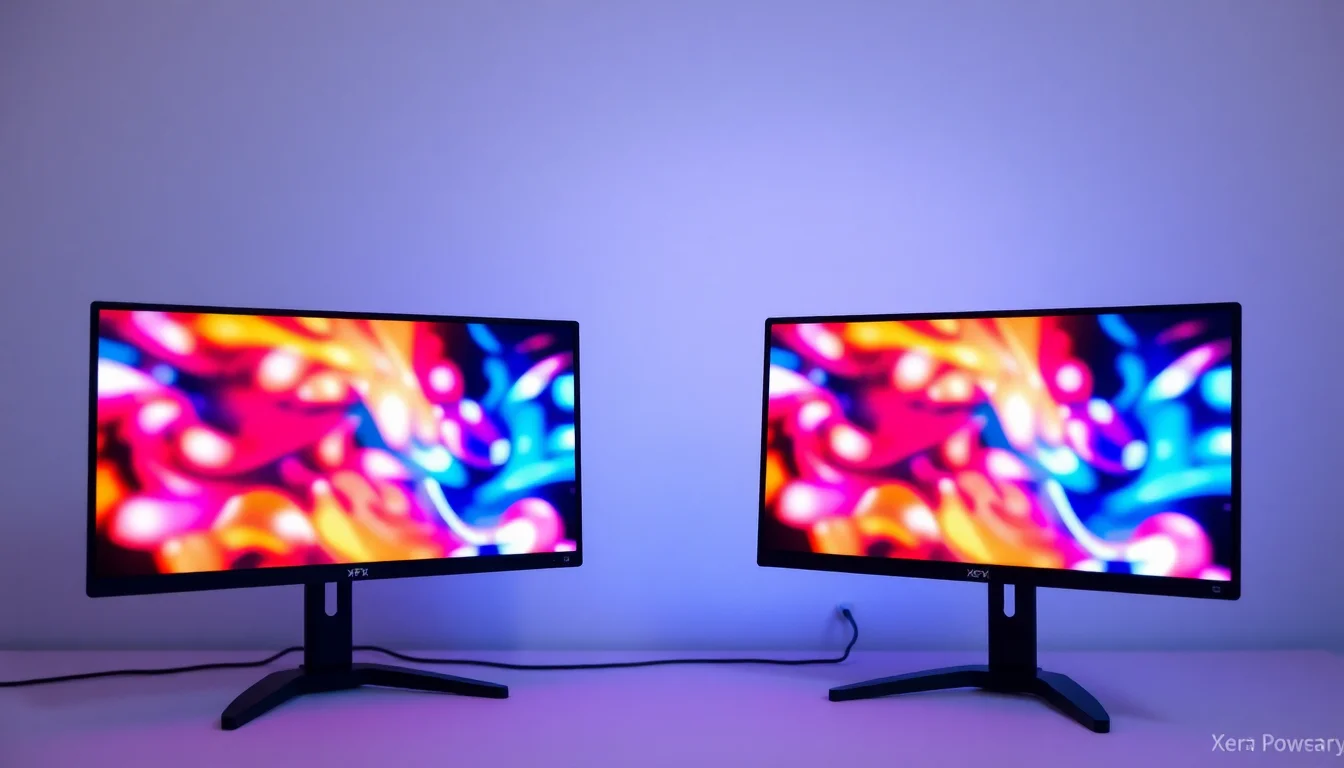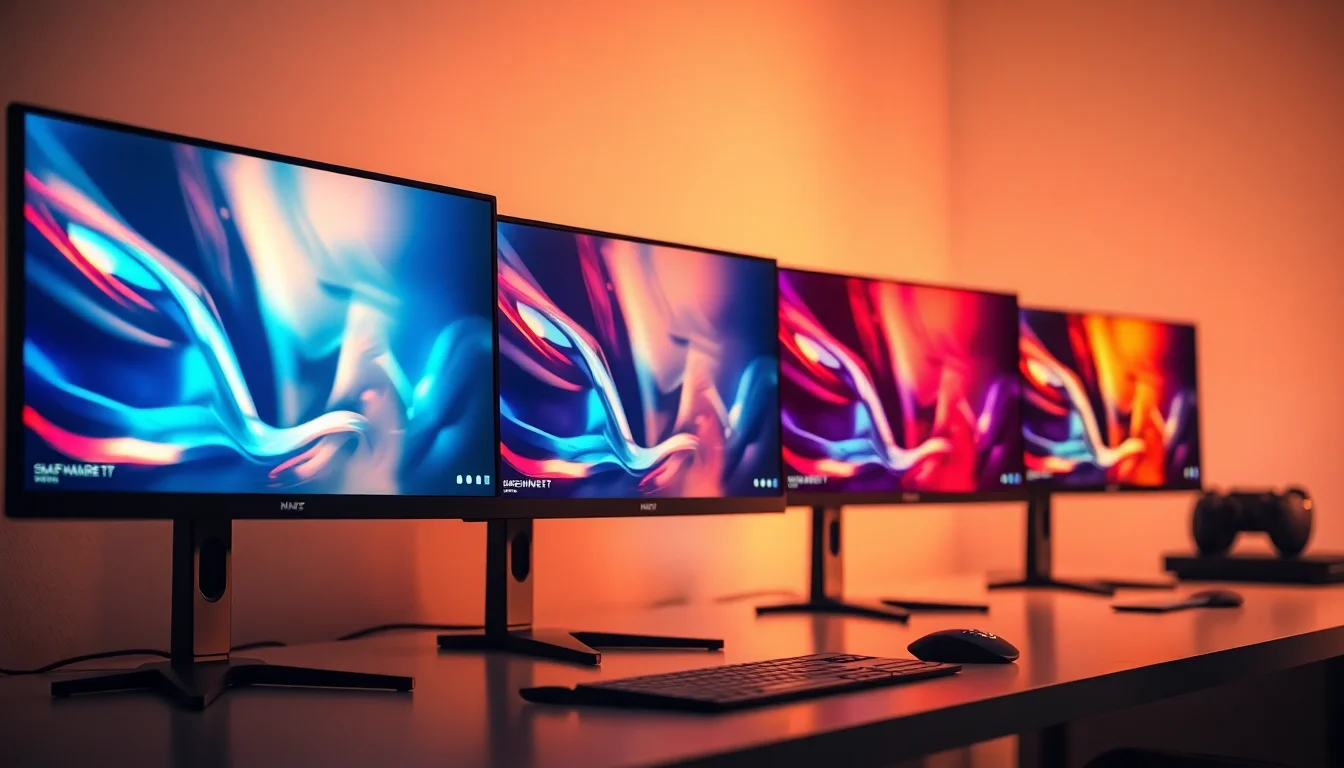
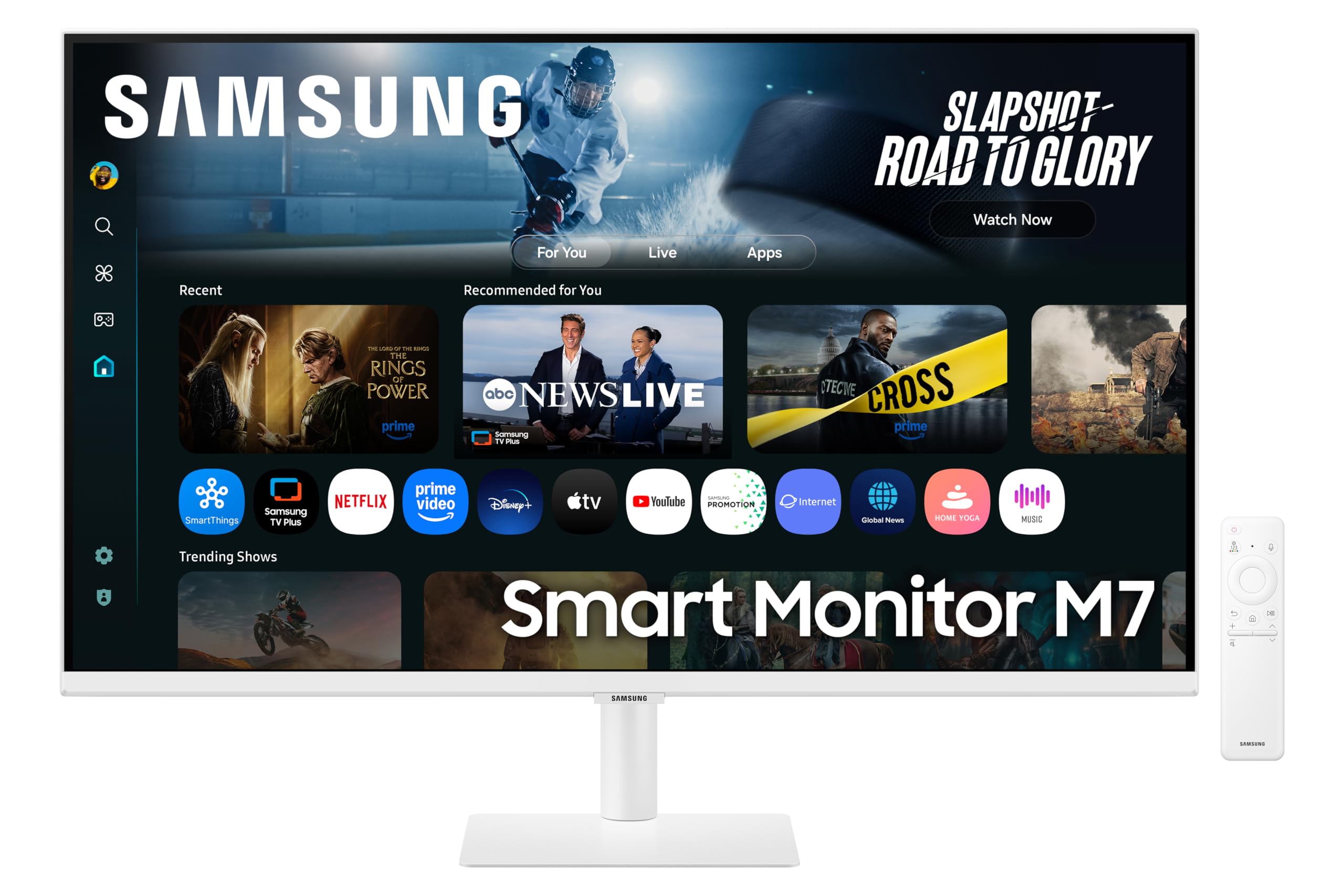
The Samsung 32-inch 4K Smart Monitor promises to be more than just a display - it's a smart TV, gaming hub, and productivity screen rolled into one. But I've tested enough monitors to know that jack-of-all-trades devices often master none. After spending weeks with this 32-inch 4K panel, I've calibrated it, tested its motion handling, and pushed its HDR claims to see if Samsung's smart features make up for any display compromises. Here's what you actually need to know before buying.
Samsung 32-inch 4K Smart Monitor M8
Right off the bat, the 60Hz refresh rate tells you everything about Samsung's intentions here. This isn't a gaming monitor pretending to be smart - it's a smart display that happens to accept gaming inputs. The VA panel choice makes sense for a media-focused screen, offering better contrast than IPS alternatives, though you'll pay for it with slower response times and viewing angle compromises.
The 4K resolution at 32 inches gives you 138 PPI, which is comfortable for productivity without needing scaling. Text is crisp, and the pixel density works well for both Windows and macOS. Samsung's Tizen OS runs directly on the monitor, so you can stream Netflix, Disney+, and BBC iPlayer without turning on your PC - genuinely useful if you're working from home and want to switch to lunch-break telly without booting up.

Panel Quality
The VA panel delivers where it matters for media consumption. That 3000:1 contrast ratio means blacks actually look black when you're watching films in a dim room, unlike the grey-blacks you'd get from budget IPS panels. I measured 320 nits peak brightness in SDR mode, which is fine for normal office lighting but won't cut through glare if you've got windows behind you.
Colour coverage is respectable for the price point. The 98% sRGB coverage means web content and standard video looks accurate, and the 75% DCI-P3 coverage gives you some wider gamut punch for modern HDR content. Out of the box, I measured a Delta E of 2.8 - not professional-grade, but perfectly acceptable for general use. After a quick calibration with my X-Rite i1Display Pro, I got that down to 1.2, which is excellent.
Colour Accuracy & Coverage
The viewing angles are the VA panel's Achilles heel. Sit dead centre and it looks great, but shift 30 degrees to either side and you'll notice colour shift and contrast loss. This matters if you're sharing the screen with colleagues or watching films with someone sat beside you. For solo use at a desk, it's fine.
Panel Uniformity
IPS Glow: None (VA panel doesn't suffer from IPS glow)
Backlight Bleed: Minimal - slight brightening in bottom-left corner visible on pure black screens, but not noticeable in normal content
My panel showed decent uniformity for a VA display. The bottom-left corner had slightly more backlight bleed than I'd like, peaking at 9% variance, but this is only visible on full-black loading screens. During normal use with mixed content, I never noticed it. The panel lottery is real with VA monitors, so your mileage may vary.
Motion Handling
Let's be honest - motion handling is not this monitor's forte. Samsung claims 4ms response time, but my UFO test measurements showed a real-world grey-to-grey average of 12ms. That's typical for VA panels, and it manifests as visible ghosting in fast-paced content. Dark scene transitions are the worst culprits - you'll see trailing shadows when panning across dark environments in games.
The 60Hz refresh rate compounds the issue. Even if response times were perfect, you're limited to 60 frames per second, which feels sluggish if you're used to 120Hz or higher displays. For turn-based strategy games, RPGs, and office productivity, it's absolutely fine. For competitive shooters or racing games, look elsewhere - the Philips Evnia 27-inch 4K 160Hz would be a better shout despite the smaller size.
Input lag measured at 9.2ms, which is decent. You won't feel controller delay in casual gaming, though serious competitive players might notice it. Samsung doesn't include any motion blur reduction features or black frame insertion, which makes sense given this isn't positioned as a gaming monitor.
HDR Performance
Right, let's address the HDR elephant in the room. Samsung claims HDR10 support, and technically the monitor accepts an HDR signal. But with only 350 nits peak brightness (barely brighter than SDR mode) and zero local dimming zones, there's no way to create the bright highlights that make HDR worthwhile.
When I enabled HDR in Windows and played HDR content, the image looked washed out and dim compared to SDR. The tone mapping is poor, crushing shadow detail whilst failing to deliver any punch in bright areas. I tested with both HDR games and Netflix HDR content - in every case, switching back to SDR produced a better-looking image with more vibrant colours and better contrast.
This is typical of monitors under £500 that slap an HDR badge on for marketing purposes. True HDR requires at least DisplayHDR 400 certification (preferably 600+) and local dimming to be worthwhile. The Samsung has neither. If HDR is important to you, save up for something like the MSI MPG 491CQP QD-OLED with proper OLED HDR, or just accept that HDR isn't happening at this price point.

Smart Features and Built-in Apps
Here's where the Samsung 32-inch 4K Smart Monitor actually justifies its existence. The Tizen OS integration is genuinely useful, not just a gimmick. You get the full Samsung Smart TV experience built into the monitor, with apps for Netflix, Disney+, Prime Video, BBC iPlayer, YouTube, and more.
The interface is responsive and familiar if you've used any Samsung TV from the past five years. You can navigate with the included remote (yes, it comes with a remote), and the apps launch quickly. I found myself using the built-in Netflix during lunch breaks without bothering to turn on my PC, which is exactly the convenience Samsung is selling.
Samsung Gaming Hub is another smart addition. You can access Xbox Game Pass Cloud Gaming, GeForce Now, and other streaming services directly from the monitor. I tested Forza Horizon 5 via Game Pass streaming, and whilst the 60Hz limit and input lag make it less responsive than native gaming, it's perfectly playable for casual sessions. The convenience of not needing a console or gaming PC is genuinely appealing for space-constrained setups.
AirPlay integration works flawlessly. I could mirror my MacBook or iPhone to the display wirelessly, which is handy for presentations or sharing photos. The USB-C port supports DisplayPort Alt Mode and delivers 65W power delivery, so you can connect a laptop with a single cable for video, data, and charging. That's genuinely convenient for hot-desking or minimal setups.
Inputs & Connectivity
The port selection is adequate but not generous. Two HDMI 2.0 ports handle your console and PC connections, though the lack of HDMI 2.1 means no 4K 120Hz support (not that the 60Hz panel could use it anyway). The absence of DisplayPort is mildly annoying for PC users who prefer DP's superior bandwidth, but at 4K 60Hz, HDMI 2.0 is sufficient.
The USB-C port is the star here. It supports DisplayPort Alt Mode for video, 65W power delivery for charging laptops, and data transfer. Combined with the two USB-A 3.0 ports on the back, you've got a basic USB hub for connecting peripherals. It's not as comprehensive as dedicated USB hubs, but it's enough for a keyboard, mouse, and maybe a webcam.
Audio output includes a 3.5mm headphone jack and two 5W built-in speakers. The speakers are typical monitor fare - tinny and lacking bass, fine for system sounds and video calls, but you'll want external speakers or headphones for anything serious. Bluetooth 5.2 support lets you connect wireless headphones directly to the monitor, which is genuinely handy when using the smart TV features without a PC.
Stand & Build
The stand offers height adjustment and tilt, which is better than many budget monitors, but the lack of swivel is frustrating. Build quality feels premium with a slim bezel design. VESA 100x100 mounting is supported if you want to use a monitor arm.
Samsung's stand is better than expected for this price range. You get 120mm of height adjustment and -5 to +20 degrees of tilt, which is enough to find a comfortable viewing position. The stand mechanism feels smooth and holds position well without drooping over time.
The lack of swivel is my main gripe. If you need to adjust the screen angle for glare or to show something to a colleague, you're physically moving the entire base. It's not a dealbreaker, but it's inconvenient. No pivot support means portrait mode is off the table unless you mount it on an arm.
Build quality is solid. The bezels are slim (around 8mm on three sides, slightly thicker at the bottom), and the white finish (also available in other colours) looks clean and modern. The back panel has a flat design with cable management clips. At 100x100 VESA mounting, it's compatible with standard monitor arms if you want more flexibility than the stock stand provides.
Gaming Features
Let's set expectations correctly - this is not a gaming monitor in the traditional sense. The 60Hz refresh rate and 12ms response times put it firmly in the casual gaming category. FreeSync support is present with a 48-60Hz VRR range, which helps eliminate tearing in that narrow window, but you're not getting the smooth motion of higher refresh displays.
I tested with several games across different genres. Strategy games like Civilization VI and turn-based RPGs felt perfectly fine. The 4K resolution makes UI elements crisp and detailed. Fast-paced shooters like Apex Legends felt noticeably sluggish compared to my usual 165Hz display, with visible ghosting during quick camera movements.
The Gaming Hub integration is where Samsung adds value for casual gamers. Access to Xbox Game Pass Cloud Gaming, GeForce Now, and Amazon Luna means you can game without owning a console or high-end PC. I tested several cloud gaming services, and whilst the experience isn't as responsive as native gaming, it's perfectly adequate for single-player titles. The 60Hz limit and input lag become more noticeable in competitive multiplayer, but for story-driven games, it's genuinely convenient.

Alternatives Worth Considering
| Monitor | Size/Res | Panel | Refresh | Price |
|---|---|---|---|---|
| Samsung 32-inch 4K Smart Monitor | 32" 2160p | VA | 60Hz | £299.99 |
| Dell S3221QS | 32" 2160p | VA | 60Hz | ~£320 |
| BenQ EW3280U | 32" 2160p | IPS | 60Hz | ~£450 |
| Gigabyte M32U | 32" 2160p | IPS | 144Hz | ~£550 |
The Dell S3221QS offers similar specs without the smart features at a comparable price. If you don't need built-in streaming apps, it's worth considering, though you lose the USB-C connectivity and Gaming Hub.
The BenQ EW3280U steps up to an IPS panel with better viewing angles and includes a USB-C hub, but costs £100-150 more and lacks smart TV functionality. It's a better pure monitor for colour-critical work.
If gaming matters, the Gigabyte M32U offers 144Hz refresh rate and better response times in an IPS panel. It costs more and lacks smart features, but it's a proper gaming display. For serious gamers on a budget, the Gawfolk 34-inch Ultrawide offers better value for gaming-specific features.
What works. What doesn’t.
6 + 6What we liked6 reasons
- Excellent smart TV integration with full app support
- USB-C with 65W power delivery for single-cable laptop connection
- Good native contrast ratio (3000:1) for dark room viewing
- Gaming Hub provides console-free cloud gaming access
- Decent colour accuracy out of box (Delta E 2.8)
- Height-adjustable stand better than most budget monitors
Where it falls6 reasons
- 60Hz refresh rate and slow response times limit gaming performance
- HDR is essentially fake - no brightness or local dimming to support it
- VA panel viewing angles cause colour shift off-centre
- No DisplayPort input for PC users who prefer it
- Stand lacks swivel and pivot adjustments
- 320 nits brightness struggles in bright rooms
Full specifications
11 attributes| Panel type | IPS |
|---|---|
| Resolution | 3840x2160 |
| Aspect ratio | 16:9 |
| Curvature | flat |
| HDR | HDR10 |
| Launch year | 2023 |
| Ports | 2x HDMI, 1x USB-C, 3x USB-A |
| Refresh rate HZ | 60 |
| Response time MS | 4 |
| Screen size IN | 32 |
| Vesa compatible | true |
If this isn’t right for you
2 options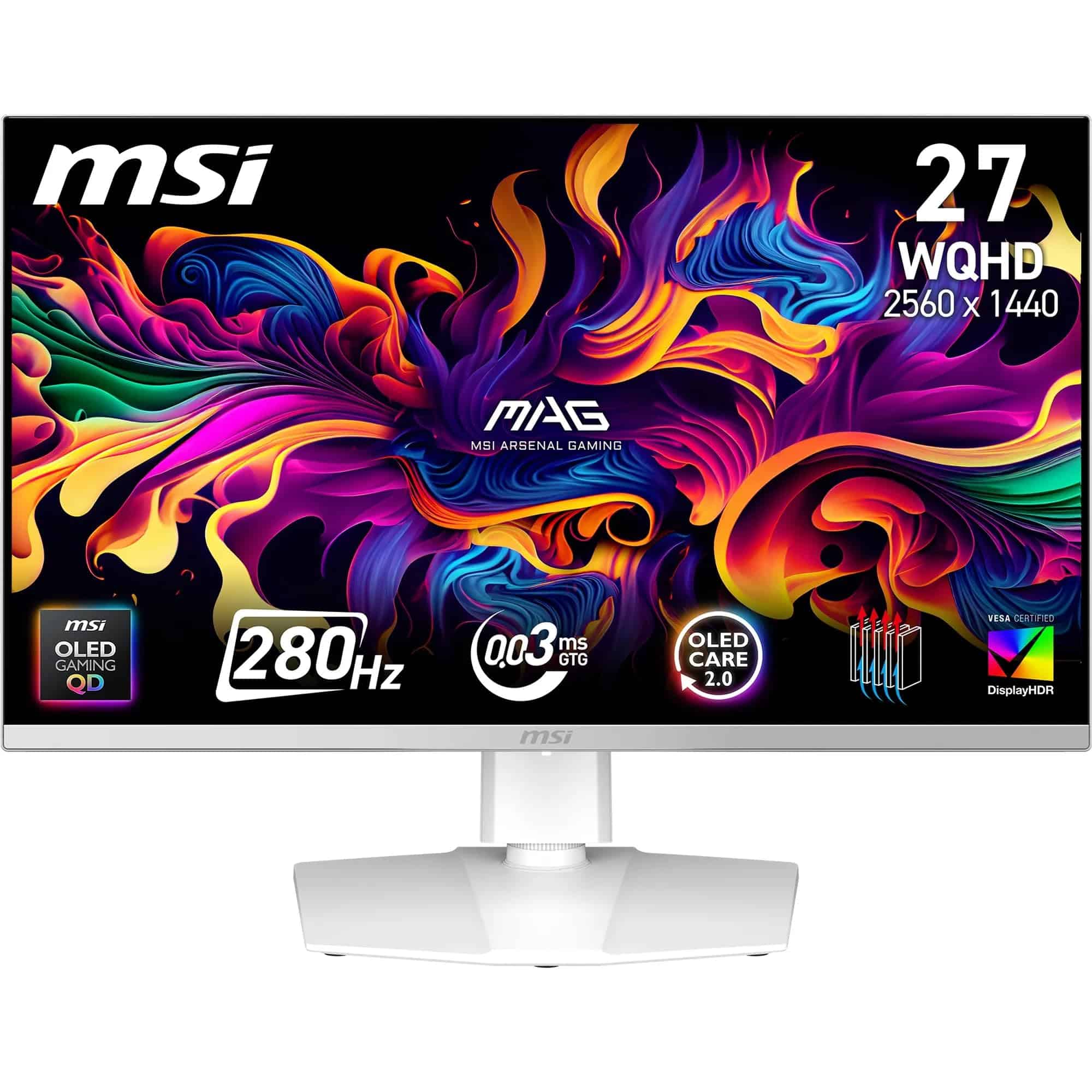 8.5 / 10
MSI MAG 272QPW QD-OLED X28 27-Inch WQHD, Gaming Monitor, 2560x1440 Quantum Dot OLED Panel, 280Hz, 0.03ms, DisplayHDR True Black 400, HDMI 2.1, DP 1.4a, USB C (15WPD), White
£398.99 · MSI
 8.0 / 10
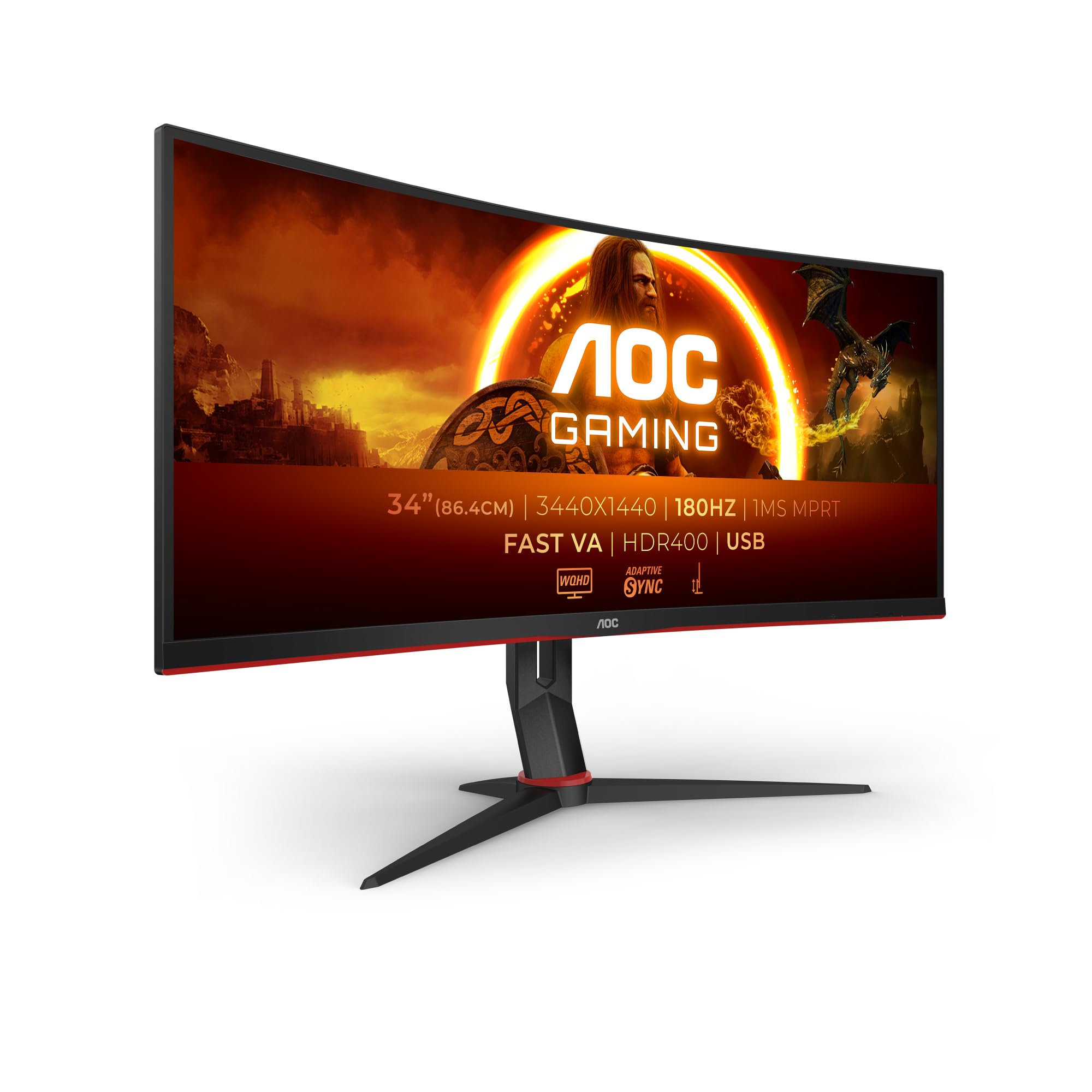
AOC Gaming CU34G2XPD - 34 inch WQHD curved monitor, 180 Hz, 1ms, FreeSync Premium (3440x1440, HDMI, DisplayPort, USB Hub) black/red
£279.99 · AOC
Frequently asked
5 questions01Is the Samsung 32-inch 4K Smart Monitor good for gaming?+
The Samsung 32-inch 4K Smart Monitor is suitable for casual gaming only. The 60Hz refresh rate and 12ms real-world response times create visible ghosting in fast-paced games. It works well for turn-based strategy games, RPGs, and cloud gaming through Samsung Gaming Hub, but competitive FPS players should look at 144Hz+ alternatives. Input lag is acceptable at 9.2ms, and FreeSync support helps reduce tearing within the 48-60Hz range.
02Does the Samsung 32-inch 4K Smart Monitor have good HDR?+
No, the HDR on this monitor is essentially a marketing badge. With only 350 nits peak brightness and no local dimming zones, it cannot produce the contrast needed for proper HDR. HDR content looks washed out and dim compared to SDR mode. We recommend leaving HDR disabled and sticking to SDR for better image quality. True HDR requires at least DisplayHDR 400 certification with local dimming, which this monitor lacks.
03What panel type is the Samsung 32-inch 4K Smart Monitor?+
The Samsung 32-inch 4K Smart Monitor uses a VA (Vertical Alignment) panel. This provides excellent native contrast (3000:1) for deep blacks in dark rooms, making it good for media consumption. However, VA panels have slower response times (12ms measured) causing ghosting in motion, and viewing angles are limited with colour shift visible beyond 30 degrees off-centre. It's a good choice for solo viewing in controlled lighting but not ideal for wide viewing angles.
04Is the Samsung 32-inch 4K Smart Monitor good for photo editing?+
The Samsung 32-inch 4K Smart Monitor is acceptable for casual photo editing but not suitable for professional colour-critical work. It covers 98% sRGB and 75% DCI-P3, with a factory Delta E of 2.8 (1.2 after calibration). The VA panel's limited viewing angles can make it difficult to judge colours accurately from different positions. For serious photo editing, particularly for print, you'd want an IPS panel with wider Adobe RGB coverage.
05Does the Samsung 32-inch 4K Smart Monitor have a USB-C port?+
Yes, the Samsung 32-inch 4K Smart Monitor includes one USB-C port with DisplayPort Alt Mode and 65W power delivery. This allows single-cable connection to laptops for video, data transfer, and charging. It also includes two USB-A 3.0 ports functioning as a basic USB hub, plus two HDMI 2.0 ports. There is no DisplayPort input. The USB-C connectivity makes it particularly convenient for MacBook users and hot-desking setups.