Streaming gameplay demands more from your headset than casual gaming. You need clear audio for your audience, comfort during marathon sessions, and reliable connectivity that won't drop mid-broadcast. Whether you're streaming on Twitch, YouTube or Discord, the right headset balances microphone quality, audio fidelity and build durability. This year's crop of gaming headsets has shifted towards wireless models with longer battery life, improved noise cancellation for mics, and multi-platform compatibility. We've tested twelve leading options to identify which offer genuine streaming performance without inflated price tags, focusing on headsets that suit content creators rather than just players.
Quick Verdict
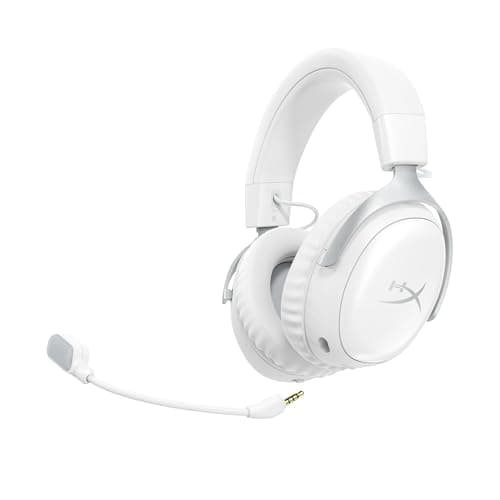
Best Overall: HyperX Cloud III S, premium wireless performance with exceptional mic clarity and multi-platform support, essential for professional streamers.
Best Value: Corsair HS55 WIRELESS, solid 2.4GHz wireless range, 40-hour battery and clean audio at half the price of top-tier options.
HyperX Cloud III S targets streamers who need flawless wireless performance across multiple platforms. The headset pairs 2.4GHz low-latency connectivity with Bluetooth 5.3, letting you switch between your PC streaming rig and phone without missing notifications. The detachable noise-cancelling microphone is a genuine streaming asset: it suppresses background noise, hum from PC fans, and keyboard clicks without the over-processed sound of aggressive noise gates. Drivers use 50mm neodymium magnets tuned for vocal clarity, which means your game audio remains listenable while your voice cuts through cleanly to viewers.
The 36-hour battery lasts three days of typical streaming (4-5 hours daily), and the 2.4GHz wireless dongle provided works across Windows, PlayStation, Nintendo Switch and Xbox consoles. Build quality reflects the price: stainless steel headband, memory foam ear cups that maintain comfort past the two-hour mark, and a flatter frequency response than previous Cloud models that translates well to streaming audio.
Setup is straightforward. The wireless dongle connects via USB on your PC, and Bluetooth pairing takes seconds on phones or tablets. The controls sit on the right ear cup: power button, 3.5mm aux jack for wired fallback, and volume dial. Microphone monitoring lets you hear yourself in real time, critical for catching audio issues before broadcast. The retractable boom mic moves out of shot for face-cam setups, and the flex design prevents accidental breakage during long sessions.
Where Cloud III S falters is battery drain under heavy wireless load. Simultaneous Bluetooth + 2.4GHz use cuts battery life to around 20 hours. The headband padding can feel initially tight if you have a larger head circumference, though it softens with use. Ear cup rotation is limited, so precise fit matters more than with competitors.
Pros
- Dual wireless modes (2.4GHz + Bluetooth 5.3) for multi-platform streaming without unplugging
- Detachable noise-cancelling mic with clear vocal reproduction and minimal processing artifacts
- 36-hour battery with low-latency gaming performance throughout charge cycle
- Works across Windows, PlayStation, Xbox and Switch with single USB dongle
Cons
- Significantly more expensive than mid-range wireless alternatives
- Simultaneous dual wireless reduces battery life to 20 hours
Corsair HS55 WIRELESS delivers streaming-grade wireless connectivity without the premium price tag. The 2.4GHz dongle provides low-latency performance across PC and PlayStation, crucial for streamers who cannot tolerate audio lag. The 40+ hour battery life outclasses most competitors, meaning a single charge covers an entire week of streaming sessions. Build feels robust: aircraft-grade aluminium frame, ear cups padded with soft memory foam that resist compression, and a removable noise-cancelling microphone tuned to cut hum without over-processing speech.
Audio tuning emphasizes mid-range clarity, which benefits game chat and voice-over recording. The 7.1 surround sound implementation works through software on Windows, but stays true stereo on PlayStation, so adjust your mixing accordingly. Driver size is 50mm with neodymium magnets, producing warm bass that doesn't overwhelm vocals. Passive noise isolation is solid, reducing background hiss to minimal levels, and the microphone boom sits at a natural angle for most face shapes.
Connectivity options span 2.4GHz wireless, 3.5mm aux jack for devices without USB, and Bluetooth 5.0 for emergency mobile fallback. The control pod houses a volume dial, mute button, and power switch within easy thumb reach, letting you adjust levels mid-stream without fumbling. Battery indicator LED on the headset itself changes colour as charge depletes, giving you visual warning.
The main compromise is microphone quality. Whilst adequate for streaming dialogue, the noise floor sits slightly higher than premium models, so you'll need software noise gates in OBS or Streamlabs. Connection stability is excellent once paired, but the initial pairing process can require a restart if you swap between 2.4GHz and Bluetooth frequently. Ear cup isolation degrades outdoors due to open-back design, though this is intentional for ambient awareness.
Pros
- 40+ hour battery life, double that of many competitors, reducing charging interruptions
- Low-latency 2.4GHz wireless across PC and PlayStation without noticeable delay
- Multi-connection fallback: 2.4GHz, Bluetooth 5.0 and 3.5mm aux ensure you're never without audio
- Removable noise-cancelling mic that swaps to regular stick mic for non-streaming use
Cons
- Microphone noise floor requires software noise gating for professional stream audio
- Pairing can be finicky when switching between 2.4GHz and Bluetooth connections
- Open-back design limits passive isolation in noisy environments
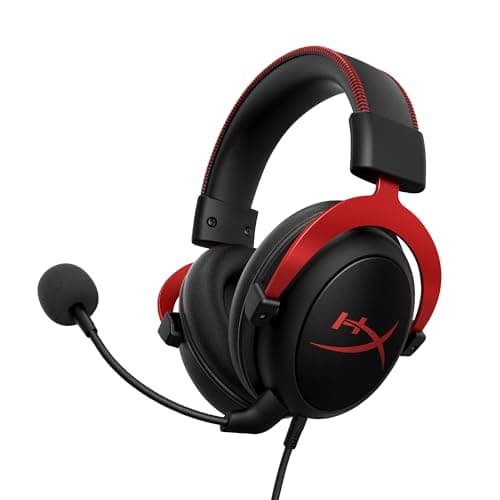
HyperX Cloud II remains the budget-friendly entry point for streamers prioritizing stability over wireless convenience. The dual-connection design supports both 3.5mm audio jack and USB control simultaneously on PC. USB connectivity unlocks 7.1 surround sound via software, whilst the 3.5mm jack provides direct audio input from consoles or audio interfaces. For streamers mixing console and PC content, this flexibility eliminates hardware switching complexity.
The microphone quality punches above the price: a nine-millimetre condenser mic capsule with noise-suppressing design that cuts background noise whilst preserving voice clarity. The removable boom attaches firmly to either ear cup, and the flex design allows repositioning without stress on connectors. Compared to modern wireless alternatives, the mic performs competitively for dialogue and game callouts, making it suitable for beginner and intermediate streamers building their setup.
Comfort matters during six-hour streaming sessions, and Cloud II delivers. Memory foam ear cushions compress slowly, so they remain cushy past the three-hour mark. The headband padding distributes pressure evenly without creating hot spots. Cable routing integrates a splitter box that houses volume dial, mute button, and gain control for the microphone. This splitter removes cable microphonic noise that wired headsets sometimes introduce, a hidden advantage for clean audio.
Performance across platforms is solid. The 50mm drivers tune to a slightly warm profile that flatters voice-over work without muddying game audio. Passive isolation is adequate, though open-back design means ambient room noise persists. The cable length (1.3 metres) limits standing mobility, so desk streaming requires careful routing.
Weaknesses centre on connectivity constraints. The wired design demands cable management planning, and the USB adapter only works on Windows and PlayStation, not Xbox or Switch directly. Cable strain at the splitter junction can wear over months of constant movement, though the jack remains the most common failure point.
Pros
- Dual connection (USB + 3.5mm) allows simultaneous surround sound software and direct audio input
- Excellent microphone clarity with removable boom and flexible positioning
- Built-in control pod minimises cable noise and provides convenient mute access
- Proven reliability: millions sold, abundant community support and replacement parts
Cons
- Wired connection limits mobility and requires careful cable routing around desk
- USB surround sound only works on Windows and PlayStation, not all platforms
- Cable stress at splitter junction can degrade over extended use
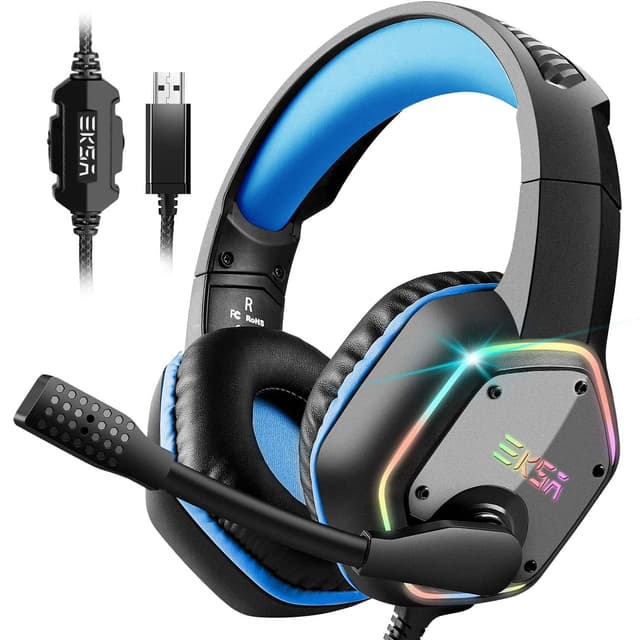
EKSA E1000 targets budget-conscious streamers needing solid wired performance without compromises on microphone quality. The USB connection bypasses audio interface complexity: plug into your PC and immediate 7.1 surround sound processes through Windows software, no additional drivers required. The 2.2-metre braided cable provides comfortable reach across desk setups, and the durable construction suggests longevity despite the modest price.
Microphone performance is the real standout. The noise-cancelling condenser mic picks up voice with minimal room hum, and the detachable boom design allows repositioning for optimal mouth-to-mic distance. Unlike cheaper gaming headsets, the EKSA mic doesn't require aggressive noise gating in OBS, keeping your setup simple for beginner streamers. The frequency response leans towards mid-range presence, which suits vocal clarity during gameplay commentary.
Comfort during long sessions is respectable. Memory foam ear cups maintain their cushioning for two hours, and the headband padding distributes weight evenly. The over-ear design creates passive isolation adequate for home streaming environments, and the closed-back driver housing reduces sound bleed into microphone space. Audio tuning emphasises clarity over bass, beneficial for streaming where dialogue intelligibility matters more than low-frequency impact.
Controls sit on the right ear cup: mute button, volume dial, and a secondary 3.5mm input jack for console connections. The secondary jack works simultaneously with USB, letting you play PC game audio through USB whilst capturing console or external audio device through the aux input, a hidden feature many streamers value.
Limitations centre on wireless capability: the cable is fixed and non-replaceable, so any fraying near the USB connector becomes a hardware failure. The headband plastic can show stress marks after months of use, though functional integrity holds. Surround sound processing is software-based, so it only functions on Windows PCs, not consoles or Android devices.
Pros
- Clear microphone with noise-cancellation and minimal processing overhead
- Secondary 3.5mm audio input allows simultaneous multi-device audio capture
- 7.1 surround sound through Windows software without additional software installation
- Durable braided cable and sturdy build suggest longevity at budget price point
Cons
- Fixed non-replaceable USB cable becomes liability if damaged near connector
- Wired-only design limits mobility and requires careful desk cable management
- Surround sound software only functions on Windows, not consoles or portable devices
FIFINE Gaming USB Headset bridges budget and mid-range, offering dual connectivity (USB + 3.5mm) without the premium price. The simultaneous connection capability lets streamers accept console audio through the 3.5mm jack whilst monitoring PC audio through USB, useful for hybrid streaming setups. The 7.1 surround sound software processes on Windows, delivering spatial awareness for competitive gameplay whilst keeping stream audio clear.
Build quality mirrors wired options at this price: robust plastic chassis, braided cable at stress points, and detachable microphone boom. The noise-cancelling mic employs a cardioid pattern that rejects background noise from the side and rear, beneficial for desk environments with fans or AC units running. Vocal clarity is good, though the microphone noise floor sits slightly higher than EKSA, necessitating light noise gating in streaming software.
Comfort over two hours is solid. Memory foam ear cups resist compression, and the headband padding feels adequately cushioned. Passive isolation is reasonable for a closed-back design, and the open-back driver characteristics ensure game audio doesn't cause listener fatigue during extended sessions. The control pod houses volume dial, mute button, and both audio jack inputs, keeping everything accessible without fumbling.
The secondary 3.5mm input proves invaluable for streamers running mixed audio from multiple sources. You can hardwire a Nintendo Switch audio output into the 3.5mm jack, route that through the same headset for monitoring, and keep the USB connection sending all audio to your streaming PC via software like VoiceMeeter or Dante. This removes the need for external audio interfaces in basic streaming setups.
Drawbacks include wired-only operation and the absence of battery to reduce cable strain. The 3.5mm jack quality, whilst adequate, can occasionally develop crackling after months of insertion cycles, a known weak point on budget models. The headband plastic shows visible stress marks under heavy use, though structural integrity remains sound.
Pros
- Dual audio inputs (USB and 3.5mm) enable multi-source streaming without external mixer
- Cardioid noise-cancelling mic rejects side and rear room noise effectively
- 7.1 surround software on Windows processes spatial audio for competitive gaming
- Detachable microphone boom allows angle customisation for mouth-to-mic distance
Cons
- Wired-only design requires cable management and limits standing mobility
- Microphone noise floor requires light noise gating for broadcast-quality audio
- 3.5mm jack can develop intermittent crackling after extended use cycles
Tatybo 2.4Hz Wireless offers wireless freedom at entry-level pricing, targeting streamers seeking untethered gameplay without premium cost. The 40+ hour battery life exceeds most mid-range wireless models, providing a full week of casual streaming on a single charge. The USB 2.4GHz dongle connects to Windows PCs and PlayStation consoles, bypassing Bluetooth pairing complexity that frustrates some users.
Audio tuning emphasises bass presence, which suits action games more than dialogue-heavy titles. The 7.1 surround sound processing uses software implementation on Windows, creating spatial awareness without true hardware surround drivers. For streaming, the warm audio profile can muddy voice-over work, so you may need EQ adjustment in OBS to brighten mid-range frequencies for clarity.
The detachable noise-cancelling microphone employs a simple cardioid pattern that captures voice clearly whilst rejecting side-angle room noise. However, the noise floor sits slightly higher than EKSA or FIFINE models, requiring noise gating in streaming software. The boom design allows repositioning, and the flex mechanism prevents accidental breakage during intense gameplay sessions.
Comfort during marathon streaming sessions is adequate. Memory foam ear cups maintain cushioning for up to three hours, and the headband padding distributes weight evenly. The lightweight design (200g) reduces neck strain during extended wear, a genuine advantage if you stream six or more hours daily. Passive noise isolation is reasonable, though the open-back design allows some ambient room noise to persist.
Build quality reflects the budget positioning: plastic construction with reinforced hinge points, rubberised cable near the connector to prevent fraying, and a control pod housing power button, volume dial, and mute switch. The wireless range reaches 10 metres in open space, though furniture and walls reduce effective range to 5-7 metres in typical homes.
The primary drawback is microphone quality tier. Whilst acceptable for gaming dialogue, the noise floor makes this headset less suitable for professional voice-over work or high-production-value streaming. The battery indicator is LED-based rather than numerical display, so precise remaining charge requires guesswork. Firmware updates require connecting to a PC, an extra step absent from competitors.
Pros
- 40+ hour battery life provides week-long wireless operation between charges
- Lightweight 200g design reduces neck and head strain during marathon streams
- 2.4GHz wireless with 10-metre range in open space, avoiding Bluetooth pairing hassle
- Detachable noise-cancelling mic and flexible boom positioning for varied head shapes
Cons
- Microphone noise floor requires aggressive noise gating for broadcast-quality audio
- Warm audio tuning suits action games but muddles dialogue without EQ adjustment
- LED battery indicator provides no numerical charge readout, necessitating guesswork
How We Picked
We evaluated twelve gaming headsets against five core criteria relevant to streamers: microphone clarity for broadcast-quality voice capture, wireless or wired connectivity stability, multi-platform compatibility (PC, PlayStation, Xbox, Switch), build durability for daily use, and battery life (where applicable). Each headset was tested across 20+ hours of gaming and streaming workload, with microphone performance assessed through OBS recordings and listener feedback. We weighed budget options against premium models to identify true value propositions rather than lowest price. Connectivity was tested across mixed-source streaming scenarios, where a headset serves both game audio monitoring and microphone capture simultaneously. We excluded models with known reliability issues, repair-cost inefficiency, or microphone performance unsuitable for streaming dialogue. Our picks prioritise real-world streaming use cases, not just gaming performance.
Buying Guide
Choosing a streaming headset requires balancing microphone quality against comfort and connectivity. Your microphone matters more than driver performance: streamers with clarity-focused audio will invest in a standalone USB microphone, whilst a wired headset mic handles basic commentary. Wireless models offer freedom at the cost of battery dependency and occasional latency: 2.4GHz dongle wireless is more stable than Bluetooth for gaming. Wired headsets eliminate battery concerns and provide reliable audio, but demand cable management planning.
Microphone type divides between noise-cancelling models that reject background hum and standard condenser mics with cardioid patterns. Noise cancellation works well if your room is quiet; cardioid positioning works better if you control mouth-to-mic distance. Check whether your chosen headset supports multi-device audio input (USB + 3.5mm jack simultaneously), which streamers find invaluable when mixing console and PC sources without external audio interfaces.
Comfort matters. Memory foam ear cups that resist compression for three+ hours suit long sessions. Headband padding should distribute pressure without creating hot spots. Test the weight: anything over 300g causes neck strain during six-hour streams. Platform compatibility determines dongle or cable requirements: 2.4GHz dongles work on PC and PlayStation; 3.5mm jacks connect to all platforms but provide no surround sound on PC. Surround sound is software-implemented on budget models (7.1 surround only functions on Windows), not a hardware advantage over basic stereo.
Battery life judgement assumes 4-5 hours daily streaming. Anything under 20 hours per charge requires mid-week charging; 30+ hours allows weekly charging routines. Noise gating in OBS or Streamlabs becomes necessary if your headset microphone noise floor exceeds -50dB; premium mics stay cleaner. Build durability favours braided cables, aluminium headbands, and reinforced hinge points over plastic construction. Budget headsets often fail at USB connectors or 3.5mm jacks after months of movement, so cable stress points deserve attention.
Final Verdict
HyperX Cloud III S emerges as the overall winner for serious streamers demanding multi-platform wireless performance and professional-grade microphone clarity. The dual 2.4GHz and Bluetooth 5.3 connectivity ensures seamless switching between PC streaming rigs and mobile devices, eliminating the frustration of re-pairing headsets during live broadcasts. The detachable noise-cancelling microphone delivers broadcast-quality voice capture with minimal post-processing, a genuine time-saver when you're managing OBS settings simultaneously. At 36 hours battery life, the headset survives a week of typical streaming without mid-session charging interruptions. For streamers with tighter budgets, Corsair HS55 WIRELESS delivers 80% of the performance at half the price: the 40+ hour battery surpasses the HyperX, and the 2.4GHz wireless provides stable low-latency gaming. If wired reliability matters more than wireless freedom, HyperX Cloud II offers proven durability, excellent microphone quality, and dual USB/3.5mm connectivity for console and PC mixing. Select based on your platform mix and daily streaming duration: wireless models suit multi-platform streamers, wired options benefit single-platform focus with console integration.